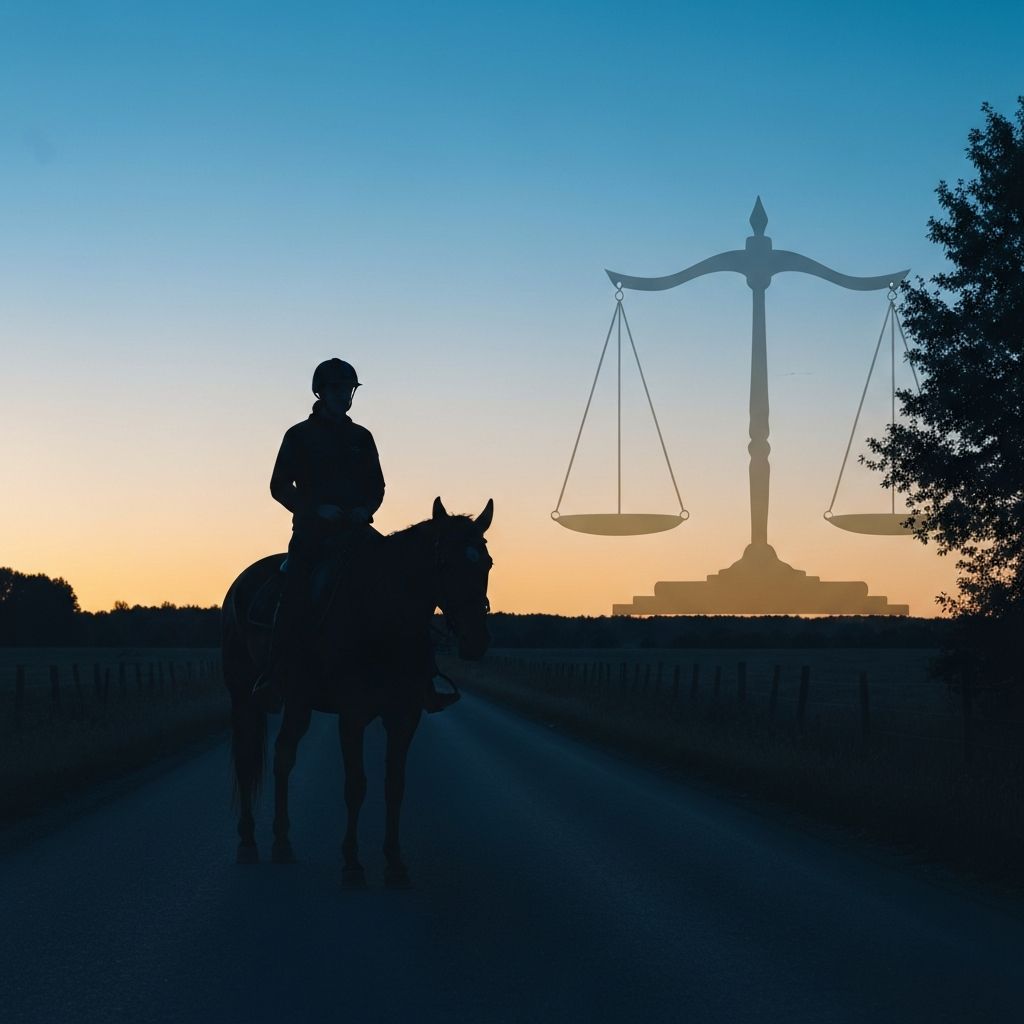
Can You Get A DUI On A Horse? Legal Analysis of Mounted Intoxication
Explore the surprising legal complexities of riding a horse while intoxicated, including state laws, historical cases, and how DUI statutes apply to horseback riders.
Attorney Robert Williams
Author
The question of whether you can receive a DUI while riding a horse might seem like a quirky hypothetical, but it's a legitimate legal question with real-world implications. As unusual as it sounds, cases involving intoxicated horseback riders have reached courts across the United States and other countries, producing varied outcomes based on specific statutory language and judicial interpretation. This comprehensive analysis explores the legal landscape surrounding mounted intoxication, examining how different jurisdictions approach this unique situation.
The Basic Legal Question
At its core, the DUI-on-horseback question depends on how jurisdictions define the "vehicles" subject to driving under the influence laws. This definitional question produces surprisingly varied answers across different states and countries.
Traditional DUI statutes typically prohibit operating a "motor vehicle" while intoxicated. Under this language, horses clearly fall outside DUI laws since they're not motor vehicles. However, many jurisdictions have broader statutes prohibiting intoxicated operation of "vehicles" generally, and whether a horse constitutes a vehicle becomes the central question.
The legal distinction matters significantly. DUI convictions carry serious consequences including license suspension, fines, potential jail time, and permanent criminal records. Whether these consequences can attach to horseback riding while intoxicated depends entirely on applicable statutory language and how courts interpret it.
Historical Context
Understanding the historical relationship between horses and intoxication laws provides useful context for modern legal analysis.
Before automobiles dominated transportation, horses served as primary transportation, and concerns about intoxicated riders existed centuries ago. English common law recognized offenses related to being drunk while in charge of horses or carriages, reflecting the real dangers intoxicated riders posed to themselves and others on public roads.
Early American laws often addressed intoxication on public roads without limiting coverage to specific vehicle types. As automobiles emerged and became dominant, legislation increasingly focused on motor vehicles specifically, though some jurisdictions retained broader language.
The modern resurgence of interest in equestrian DUI questions reflects both continuing horseback riding in rural areas and broader questions about how traditional laws apply to unusual situations.
States Where Horses May Qualify as Vehicles
Several states have DUI statutes broad enough to potentially encompass horses, though judicial interpretation varies.
California Vehicle Code defines vehicles broadly to include devices by which persons or property may be transported on highways, excluding those moved by human power. California courts have addressed whether horses constitute vehicles under this definition, with some cases suggesting horses could qualify.
Colorado's DUI statute uses "vehicle" language that courts have interpreted to potentially include horses. A notable Colorado case involved charges against a horseback rider, though the specific outcome depended on multiple factors including where the alleged offense occurred.
Pennsylvania similarly uses broad vehicle definitions in its DUI statutes. The state's Vehicle Code defines vehicles to include "every device in, upon or by which any person or property is or may be transported or drawn upon a highway."
Florida and several other states have similar definitional approaches that could theoretically bring horses within DUI statute coverage depending on specific circumstances and judicial interpretation.
Importantly, even in states with broad definitions, prosecutors must prove all DUI elements, including that the rider was operating the horse while impaired, typically on a public roadway. The practical challenges of proving these elements often affect whether cases proceed.
States with Motor Vehicle Limitations
Many states limit DUI coverage to motor vehicles specifically, clearly excluding horses from DUI liability.
Texas DWI statute explicitly applies to "motor vehicles," making horseback DUI impossible under standard drunk driving laws. However, Texas does have separate laws addressing intoxication in public that might apply to intoxicated horseback riders in public spaces.
New York similarly limits its DWI laws to motor vehicles, though the state's intoxication-related offenses outside the DWI context might still create legal exposure for intoxicated riders.
Many states follow this motor vehicle limitation pattern, reflecting legislative focus on the specific dangers posed by intoxicated operation of powerful motor vehicles rather than broader intoxication in public.
In these jurisdictions, intoxicated horseback riders might face other charges, public intoxication laws, reckless endangerment statutes, or animal cruelty laws if their condition endangered the horse, but not DUI charges specifically.
The Public Roadway Requirement
Even in jurisdictions where horses might qualify as vehicles, most DUI statutes require operation on public roadways or spaces accessible to the public.
This requirement often provides practical protection for horseback riders, as much horseback riding occurs on private property, trails, or areas not meeting public roadway definitions. A rider intoxicated on private ranch land typically faces no DUI exposure regardless of whether horses qualify as vehicles.
However, riders on public roads, even crossing briefly or riding along road shoulders, might enter DUI statute coverage if their jurisdiction includes horses within its definition.
The public roadway element also creates proof challenges for prosecutors. Establishing precisely where alleged intoxication occurred and whether that location qualifies as a public road adds complexity to potential cases.
Notable Cases and Incidents
Several cases involving alleged horseback DUI have attracted media attention and legal analysis.
A widely reported Kentucky case involved a man charged with DUI while riding a horse on public roads. The case generated significant public attention and raised questions about Kentucky's statute interpretation. Ultimately, the statutory language and judicial interpretation determined the outcome.
California has seen multiple incidents where intoxicated horseback riders were stopped by law enforcement. The handling of these incidents has varied, with some resulting in DUI charges under California's broad vehicle definition while others resulted in alternative charges or no charges.
International cases have also addressed the question. A notable British case examined whether horses constituted "mechanically propelled vehicles" under UK law, with the court ultimately finding they did not, an analysis that nonetheless generated significant legal and public discussion.
These cases illustrate that while horseback DUI cases are uncommon, they do occur and receive serious legal treatment when they arise.
Alternative Charges and Consequences
Even where DUI statutes don't apply to horses, intoxicated riders may face other legal consequences.
Public intoxication laws in many jurisdictions prohibit being intoxicated in public places regardless of whether the person is operating any vehicle. Horseback riders on public roads while intoxicated might face these charges even if DUI specifically doesn't apply.
Disorderly conduct statutes sometimes apply to behavior that creates hazards or disturbances. Intoxicated riding creating traffic hazards or public disturbances could potentially fall under such statutes.
Reckless endangerment charges might apply if intoxicated riding created dangers to others. A rider weaving into traffic or whose horse endangered pedestrians might face these charges regardless of DUI statute coverage.
Animal cruelty or neglect laws could theoretically apply if intoxication affected the rider's ability to properly control and care for the horse. Situations where horses were injured due to riders' impaired condition might generate such charges.
Practical Safety Considerations
Beyond legal questions, practical safety concerns make intoxicated horseback riding dangerous regardless of legal consequences.
Horses are large, powerful animals requiring constant attention and control. Impaired riders may fail to properly guide horses, potentially causing traffic accidents on public roads or injuries in other settings.
Falls from horses cause serious injuries including head trauma, spinal injuries, and broken bones. Intoxication increases fall risk while potentially reducing protective reflexes that might limit injury severity.
Horse safety also matters. Impaired riders may inadvertently harm horses through improper handling, failure to notice hazards, or inability to properly care for horses after riding.
The general principle that intoxication impairs judgment and coordination applies equally to horseback riding as to other activities, even if legal consequences vary.
Legal Reform Considerations
The inconsistent treatment of horseback riders across jurisdictions raises interesting legal policy questions.
Arguments for including horses in DUI statutes note that intoxicated riders on public roads create genuine safety risks. A horse weighing a thousand pounds or more, controlled by an impaired rider, can cause serious accidents and injuries.
Arguments against inclusion suggest that motor vehicles pose fundamentally different risks due to their speed, mechanical nature, and inability to partially self-navigate. Horses, being living creatures with some self-preservation instincts, arguably present different risk profiles.
Some suggest that alternative legal frameworks, perhaps specific statutes addressing intoxicated riding of animals, might better address the issue than stretching DUI statutes designed primarily for motor vehicles.
Legislative clarity would benefit all parties. Riders would know what conduct risks criminal liability, prosecutors would have clear statutory basis for appropriate cases, and courts wouldn't need to interpret ambiguous language.
Practical Advice
For those who ride horses and consume alcohol, several practical considerations apply.
First, check your specific jurisdiction's laws. The analysis varies dramatically by location, and what's clearly legal in one state might be criminal in another. Local attorneys can provide jurisdiction-specific guidance.
Second, regardless of legal status, don't ride while intoxicated. The safety risks to yourself, others, and your horse make intoxicated riding dangerous regardless of legal consequences.
Third, if you plan to drink, arrange transportation that doesn't involve riding afterward. The same planning you'd apply to avoiding drunk driving applies to other transportation modes.
Fourth, if charged with horseback DUI, take the charges seriously and obtain legal representation. These charges may carry the same consequences as motor vehicle DUI in some jurisdictions.
International Perspectives
Other countries have their own approaches to the horseback DUI question, providing interesting comparative perspectives.
The United Kingdom has addressed the question through cases examining whether horses are "mechanically propelled vehicles" under relevant statutes. Courts have generally found they are not, though other charges might still apply to intoxicated riders.
Australia has seen horseback DUI cases and charges, with varying outcomes across different states and territories. Australian media has reported multiple incidents of horseback riders facing intoxication-related charges.
Germany and other European countries have their own frameworks addressing the question, often focusing on general traffic law rather than DUI-specific statutes.
Conclusion
The question of whether you can get a DUI on a horse doesn't have a simple, universal answer. It depends entirely on specific statutory language in your jurisdiction and how courts have interpreted that language. Some states clearly exclude horses by limiting DUI laws to motor vehicles, while others use broad vehicle definitions that might encompass horses. Regardless of legal status, intoxicated horseback riding creates genuine safety risks and may expose riders to alternative charges even where DUI specifically doesn't apply. The safest approach remains avoiding intoxicated riding entirely, just as you would avoid drunk driving.
More from News
Continue exploring our curated collection of articles

Location Of Area Code 941: Southwest Florida Guide
A complete guide to area code 941 in Southwest Florida including cities covered, time zone, dialing rules, history, and how to spot suspicious calls.

Area Code 920 Wisconsin: Complete Guide to Cities and Info
Explore Wisconsin's 920 area code including cities served, history, overlay codes, time zone details, and how to identify potential scam calls today.

Dangerous WebRAT Malware Now Being Spread by GitHub Repositories
A dangerous new WebRAT malware is spreading through GitHub repositories, targeting developers with infected code. Learn how to detect and stay safe.