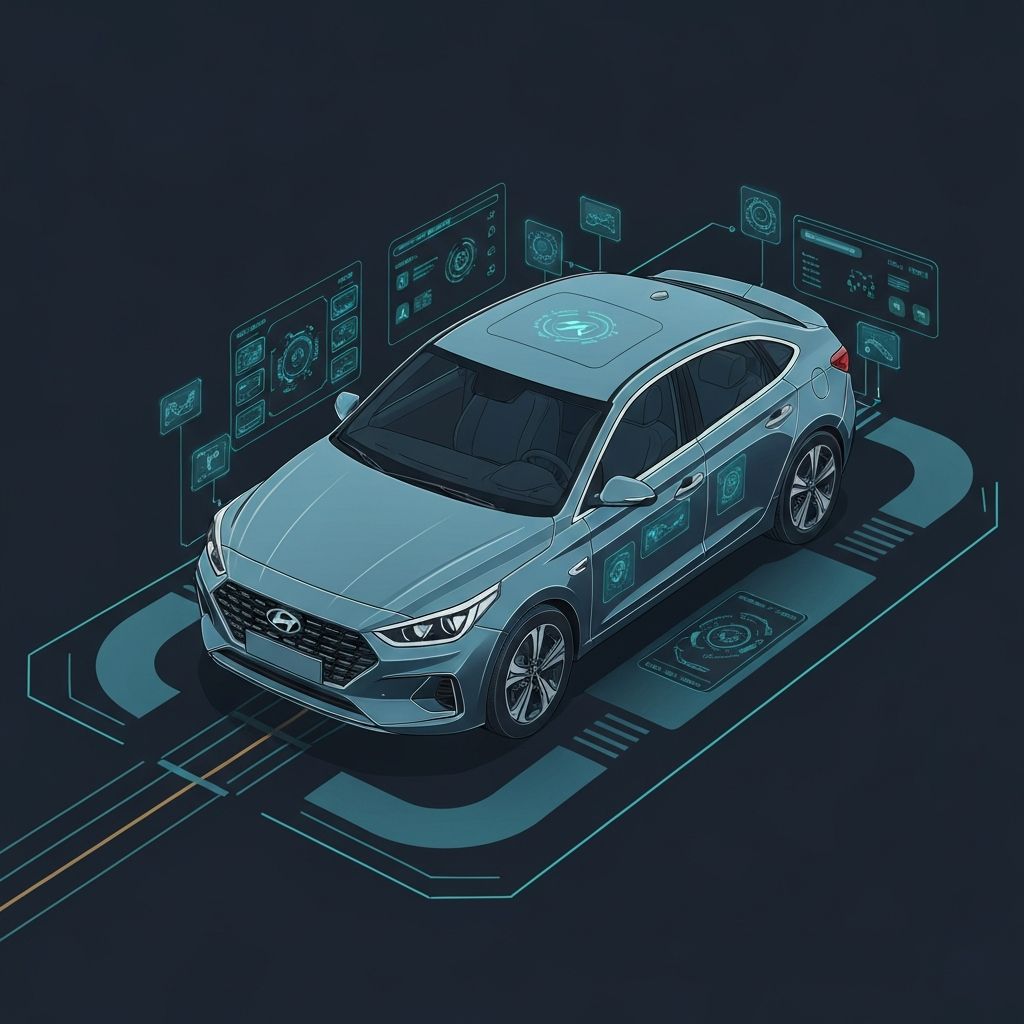
Hyundai Artificial Intelligence: Autonomous Vehicles and Smart Mobility Innovation
Discover how Hyundai leverages artificial intelligence for autonomous vehicle development, smart mobility solutions, and the future of automotive transportation.
James Rodriguez
Author
Hyundai Motor Company embraces artificial intelligence as fundamental to its automotive future, investing substantially in autonomous vehicle development, intelligent driver assistance systems, and smart mobility solutions. The company's AI strategy reflects recognition that future vehicle value derives from software, sensors, and intelligence embedded in vehicles alongside mechanical engineering.
Hyundai's Strategic AI Focus
Hyundai's AI strategy encompasses autonomous driving, intelligent infotainment systems, predictive maintenance, and fleet optimization. The company established dedicated AI research divisions and invested in autonomous vehicle testing facilities. Partnerships with technology companies accelerated AI capability development.
Autonomous Vehicle Development
Hyundai develops Level 3 and 4 autonomous systems enabling highway automation and urban autonomous operation. Comprehensive sensor suites including LiDAR, radar, and cameras provide environmental perception. Path planning algorithms determine optimal routes while satisfying safety constraints.
Driver Assistance Systems
Currently deployed Hyundai vehicles feature advanced driver assistance systems powered by AI. Adaptive cruise control maintains safe distances from preceding vehicles. Collision avoidance systems detect imminent collisions and automatically brake or steer.
Driver attention monitoring systems detect driver drowsiness or distraction, alerting drivers appropriately. These systems demonstrate real-world safety benefits preventing accidents and reducing injury severity.
Infotainment and User Interface
AI-powered infotainment systems provide personalized experiences adapting to individual drivers. Voice recognition systems understand natural speech, enabling hands-free control. Contextual assistance systems anticipate driver needs through pattern recognition.
Predictive Maintenance
AI systems monitor vehicle health through extensive sensor data, identifying problems before failures occur. Algorithms analyze engine parameters, transmission behavior, and electrical systems. Predictive maintenance recommendations enable preventive service reducing unexpected breakdowns.
Fleet Management and Electric Vehicles
Commercial fleet operators leverage AI-powered fleet management systems for optimization. Telematics systems track vehicle locations enabling efficient dispatch. Electric vehicle algorithms optimize battery management and charging while improving range prediction accuracy.
Connected Vehicle Ecosystem
Hyundai develops connected vehicle ecosystems enabling vehicle-to-vehicle and vehicle-to-infrastructure communication. These connections enable collective intelligence improving everyone's navigation and safety through shared hazard information.
Conclusion
Hyundai's comprehensive AI strategy positions the company for autonomous vehicle market success. By combining automotive expertise with significant AI investment, Hyundai competes effectively with technology-native entrants. The company's commitment to AI-powered innovation demonstrates how traditional manufacturers adapt successfully to technological disruption.
Frequently Asked Questions
What is artificial intelligence and how does it work?
Artificial Intelligence (AI) refers to computer systems designed to perform tasks that typically require human intelligence. These tasks include learning, reasoning, problem-solving, perception, and language understanding. AI works through algorithms that process large amounts of data to identify patterns and make decisions.
How is AI changing industries in 2026?
AI is transforming industries through automation, predictive analytics, personalization, and enhanced decision-making. Healthcare uses AI for diagnostics, finance for fraud detection, manufacturing for quality control, and education for personalized learning experiences.
More from Technology
Continue exploring our curated collection of articles

SEO Computers: Choosing the Right Machine and Ranking a Computer Business Online
SEO computers explained two ways: the hardware specs that genuinely speed up SEO work, and how computer businesses rank for the searches that bring customers.

modern seo
How modern SEO actually works in the AI search era, based on 18 months of traffic data across 40 sites, including what stopped working and what never changed.

How AI Is Reshaping SEO and Content Marketing
Discover how AI is reshaping SEO and content marketing, from generative search and intent modeling to automated content workflows, E-E-A-T, and measurable results.