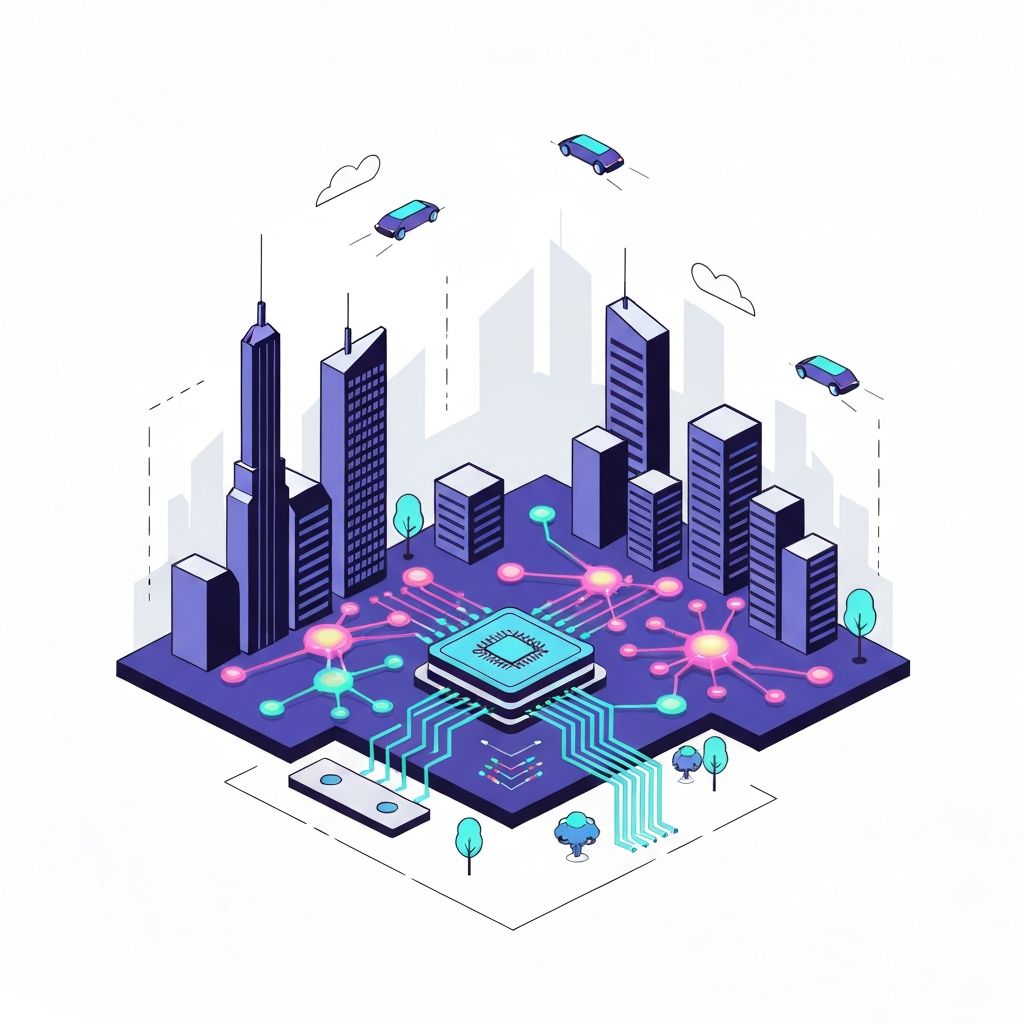
Leveling Up Into the Future: How Artificial Intelligence Is Redefining Human Potential
Discover how AI augmentation is enabling humans to achieve unprecedented capabilities, from cognitive enhancement to skill acceleration, fundamentally redefining what's possible.
Dr. Elena Rodriguez
Author
The relationship between humans and artificial intelligence is fundamentally shifting from competition to collaboration, creating unprecedented opportunities for human advancement. Rather than replacing human capabilities, AI increasingly augments and amplifies human potential, allowing individuals to achieve far beyond traditional limitations. This transformation, often referred to as "leveling up," represents one of the most significant developments in human history, comparable to the printing press, electricity, and internet adoption in its societal implications.
The AI Augmentation Paradigm
The traditional narrative positioned AI as a threat, potentially rendering human expertise obsolete in various fields. However, the emerging reality differs dramatically. Sophisticated organizations and innovative individuals discovered that combining human judgment, creativity, and contextual understanding with AI's computational power and pattern recognition creates capabilities neither humans nor AI alone could achieve.
This augmentation manifests across professional domains. Writers use AI to overcome creative blocks, generate research summaries, and streamline editing processes while maintaining creative authority and contextual judgment. Medical professionals leverage AI diagnostic tools to catch diseases earlier while focusing on patient care and complex medical decisions. Engineers employ AI for routine design optimization while concentrating on innovative problem-solving and structural conceptualization.
The key distinction emerges in intentional collaboration design. When AI systems augment rather than replace human expertise, productivity, creativity, and quality all increase substantially. Workers report greater job satisfaction, experiencing AI as assistants enabling them to focus on meaningful, higher-impact activities rather than routine tasks.
Cognitive Enhancement and Learning Acceleration
Perhaps AI's most transformative capability involves accelerating human learning and cognitive development. Personalized learning systems analyze individual learning patterns, optimize content presentation to match learning preferences, and adapt difficulty dynamically. Students progress faster while developing deeper understanding compared to traditional instruction.
Professionals upskilling through AI-powered education platforms complete training in months rather than years. The technology identifies knowledge gaps, provides targeted instruction, and validates competency mastery. Career transitions that previously seemed impossible due to training requirements become accessible within reasonable timeframes.
AI tutoring systems provide unlimited patient instruction unavailable in traditional education. Students receiving AI tutoring demonstrate learning outcomes comparable to one-on-one human tutoring while accessing technology at fraction of the cost. This democratization of quality education enables talented individuals from resource-constrained backgrounds to develop capabilities previously accessible only to the wealthy.
Knowledge workers increasingly employ AI assistants for research, literature reviews, and information synthesis. Instead of spending weeks gathering and organizing information, professionals receive synthesized summaries in hours. This acceleration enables professionals to focus on analysis, synthesis, and insight generation rather than information gathering.
Skill Development and Professional Advancement
AI-powered platforms identify skill gaps and recommend targeted development activities, creating personalized career development paths. Professionals can systematically develop expertise in emerging areas, positioning themselves for career advancement and lateral transitions. The technology particularly benefits individuals without access to formal education pathways or expensive training programs.
Creative professionals leverage AI tools for brainstorming, exploring design variations, and quickly prototyping ideas. Architects generate hundreds of design variations in hours, accelerating the exploration phase and enabling more innovative final designs. Musicians use AI composition tools to overcome creative blocks and explore musical styles beyond their current expertise.
Democratization of Expertise
One of AI's most significant impacts involves democratizing expertise previously concentrated among specialists. Small businesses access AI-powered accounting, legal, and marketing capabilities previously available only to large corporations with resources for expensive consultants. Entrepreneurs launch ventures without traditional business expertise by leveraging AI advisors providing guidance comparable to human consultants.
Healthcare AI systems bring sophisticated diagnostic capabilities to rural clinics without specialist availability. Patients in remote regions access quality diagnostic support comparable to urban medical centers. This democratization of expertise saves lives while reducing healthcare disparities.
Enhanced Decision-Making
Executives and managers increasingly employ AI systems to analyze complex data, identify patterns, and recommend decisions. These systems complement rather than replace human judgment, providing comprehensive data synthesis that human decision-makers might miss due to cognitive limitations. The human retains final decision authority while benefiting from AI-augmented analysis.
Risk assessment algorithms identify potential problems earlier than traditional monitoring, enabling proactive intervention before crises develop. Supply chain managers leverage AI predictions to optimize inventory and prevent disruptions. Financial managers use AI portfolio analysis to optimize risk-adjusted returns.
The Productivity Revolution
AI augmentation contributes substantially to productivity improvements across sectors. When implemented thoughtfully, technology reduces time spent on routine tasks, streamlines workflows, and enables focus on high-value activities. Productivity improvements benefit individual workers through reduced workload stress and employers through increased output quality and quantity.
The productivity gains from AI augmentation exceed those from previous automation waves. Rather than merely automating routine tasks, AI elevates human capability to tackle increasingly complex challenges. This creates opportunities for engaging, meaningful work rather than job displacement if workforce transitions receive adequate support.
Challenges in Realization
Despite transformative potential, several challenges must be addressed for widespread human augmentation benefits. Access disparities risk creating widening capability gaps between those with AI augmentation and those without. Addressing these disparities requires policies ensuring equitable access to AI tools and education.
Privacy concerns emerge when AI systems require extensive personal data for effective augmentation. Developing robust privacy protections enabling innovation while safeguarding personal information requires careful regulatory design and technological innovation.
Skills gaps and limited AI literacy prevent many professionals from effectively utilizing available tools. Expanding AI education and user-friendly interface design makes AI accessible to those without technical backgrounds.
The Future of Human Potential
Looking forward, human-AI collaboration will increasingly enable achievements previously considered impossible. Researchers employ AI to process scientific data, identify connections across disciplines, and accelerate scientific breakthroughs. Climate scientists use AI to model complex environmental systems and evaluate potential solutions.
Educators will leverage AI to provide personalized instruction at scale, enabling every student to receive attention customized to their needs and learning pace. Healthcare providers will access AI-augmented diagnostics enabling earlier detection and intervention for diseases.
Conclusion
Artificial intelligence represents not a threat to human potential but a transformative tool enabling individuals to achieve unprecedented capabilities. The future belongs to organizations and professionals who strategically embrace AI augmentation, combining human wisdom with technological power. By thoughtfully implementing AI as an augmentation tool rather than a replacement, society can unlock human potential at scale while creating meaningful work and addressing humanity's greatest challenges. The era of "leveling up" has commenced, offering extraordinary opportunities for those prepared to embrace human-AI collaboration as the future of professional excellence and personal achievement.
Frequently Asked Questions
What is artificial intelligence and how does it work?
Artificial Intelligence (AI) refers to computer systems designed to perform tasks that typically require human intelligence. These tasks include learning, reasoning, problem-solving, perception, and language understanding. AI works through algorithms that process large amounts of data to identify patterns and make decisions.
How is AI changing industries in 2026?
AI is transforming industries through automation, predictive analytics, personalization, and enhanced decision-making. Healthcare uses AI for diagnostics, finance for fraud detection, manufacturing for quality control, and education for personalized learning experiences.
More from Technology
Continue exploring our curated collection of articles

SEO Computers: Choosing the Right Machine and Ranking a Computer Business Online
SEO computers explained two ways: the hardware specs that genuinely speed up SEO work, and how computer businesses rank for the searches that bring customers.
modern seo
How modern SEO actually works in the AI search era, based on 18 months of traffic data across 40 sites, including what stopped working and what never changed.
How AI Is Reshaping SEO and Content Marketing
Discover how AI is reshaping SEO and content marketing, from generative search and intent modeling to automated content workflows, E-E-A-T, and measurable results.