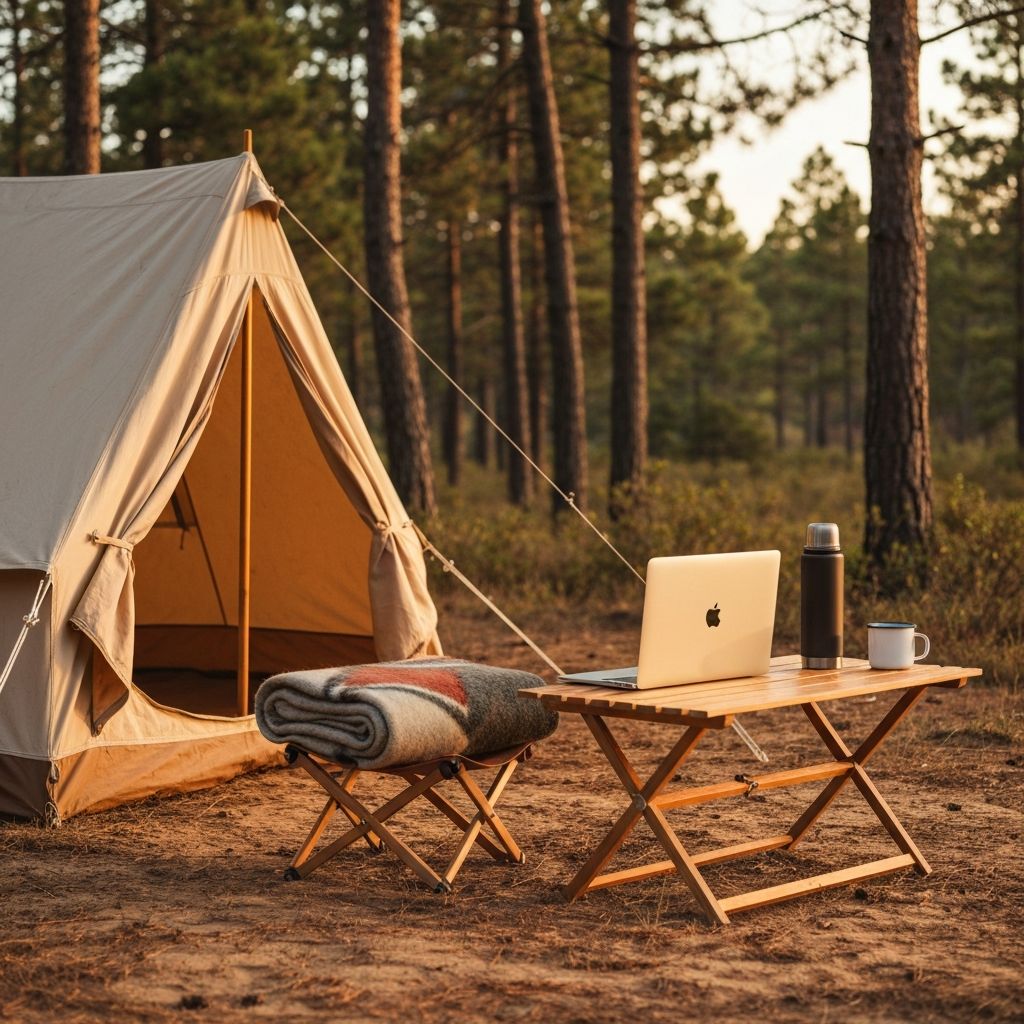
Camping Guide: Workplace Styling For The Modern Outdoor Professional
Camping guide covering workplace styling for remote professionals balancing outdoor adventures with productivity, comfort, and professional style options.
Hana Tanaka
Author
A decade ago, the idea of working from a campsite belonged to a small circle of travel writers and van life enthusiasts. Today it is part of the everyday rhythm of a growing class of remote professionals who have realized that a good laptop, a reliable hotspot, and a carefully chosen tent can replace a hotel room for days at a time. Doing it well, however, is more than simply carrying an office chair into the woods. It requires a style of working, dressing, and packing that respects both the outdoors and the job. This guide is built around exactly that idea.
Rethinking The Workday Around The Campsite
The first shift is mental. A campsite does not operate on the same schedule as a home office. Morning light is more generous. Afternoons are hotter. Evenings cool off faster than most people expect. The most productive remote professionals plan their days around these rhythms rather than against them.
Creative work, which benefits from quiet and fresh thinking, fits naturally into the first two hours after sunrise. Meetings, which demand consistent internet and a camera ready environment, sit most comfortably in the late morning once the sun has moved off the tent and the air is still mild. Administrative work, which can tolerate interruptions, belongs in the afternoon when the camp is warm and energy is lower. The final hour before sunset belongs to nothing related to a screen at all.
Choosing A Campsite That Supports Work
Not every campsite is suitable for serious work. The three non negotiables are cellular coverage, a level surface large enough for a compact work station, and shade during the hottest part of the day. If any one of these is missing, the week will be more frustrating than restorative.
Many state parks and private campgrounds now publish cellular coverage notes in their listings, and apps exist that crowdsource signal strength by provider. When coverage is uncertain, a cellular booster with a small external antenna can turn a marginal signal into a usable one. A small portable router that accepts a SIM card and serves Wi Fi to multiple devices is often a better setup than tethering a phone directly.
The Core Gear List
A sustainable camping work setup is smaller than most people assume. A well made four season tent with a dedicated vestibule for gear. A compact folding table. A camp chair with lumbar support, not a beach chair. A power station with at least five hundred watt hours of capacity, paired with a foldable solar panel. A laptop sleeve that doubles as a desk pad. A hotspot or travel router. A headlamp. A quality coffee setup, because morale matters.
Notice what is not on the list. Monitors, keyboards, and large peripherals are tempting but rarely earn their weight. A professional who truly needs a second screen will be happier working from a cabin than from a tent.
Workplace Styling Outdoors
The word styling in this context does more than describe aesthetics. It describes the way you present yourself and your surroundings on camera, because that is how the rest of the working world sees you. A few small habits raise the perceived professionalism of an outdoor workspace dramatically.
Position the camera with the sun behind it, not behind you. A backlit shot turns your face into a silhouette regardless of how expensive your laptop camera is. When the sun is not cooperating, a small clip on ring light powered by the same battery that runs the laptop will produce a flattering, even light.
Choose a background with depth but without distraction. A tree line several meters behind you is ideal. A busy picnic area is not. If the campsite offers no suitable backdrop, a neutral colored travel blanket clipped to two tent poles can act as a portable backdrop that rolls up to the size of a water bottle.
Keep the frame tidy. Coffee mugs, snack bags, and charging cables that wander into the shot tell your colleagues a different story than a clean composition of your laptop on a wood grained table. A one minute reset before every meeting is usually enough.
Dressing For The Hybrid Day
Camping clothing and office clothing are usually treated as separate wardrobes. The remote professional who alternates between the trail and the video call needs a third category that bridges the two. The goal is an outfit that photographs well from the waist up and functions well from the waist down.
Technical button down shirts in merino wool or quick dry blends look like ordinary office shirts on camera and behave like hiking shirts off camera. They resist wrinkles, manage moisture, and do not need ironing. A neutral colored quarter zip fleece layers cleanly over them when mornings are cool.
For bottoms, soft shell hiking pants in dark navy, charcoal, or olive read as neutral trousers in a video thumbnail. They accept a belt, pair with both sneakers and trail shoes, and tolerate a full day of scrambling over rocks without damage.
Accessories deserve a brief mention. A simple leather or canvas watch strap looks intentional on camera. A cap with a low key logo is camera friendly if your hair is not. A pair of prescription glasses with anti glare coating prevents the screen reflections that are the single most common styling mistake in outdoor video calls.
Sound Matters More Than You Think
If video is the face of a remote professional, audio is the voice, and audio is where most outdoor setups fail. Wind, birds, distant generators, and rustling leaves all sound charming in person and dreadful in a conference call.
Two tools solve the problem. A lavalier microphone that clips to your collar places the microphone element centimeters from your mouth, which dramatically raises the ratio of your voice to every other sound. A foam windscreen on that microphone tames the gusts that would otherwise overload it. Together, these two pieces of equipment weigh almost nothing, cost very little, and transform how you sound to colleagues.
When a lavalier is not practical, a pair of wireless earbuds with active noise cancellation is the fallback. The microphones on modern earbuds are better than they have any right to be, and the noise cancellation prevents the ambient sounds around you from bleeding through.
Power Management
Running out of power in the middle of a workday is the quickest way to lose the rhythm that makes camping work so appealing. The arithmetic is straightforward. Add up the watt hours your laptop, phone, hotspot, and lights consume over a full working day. Double it for margin. That number is the minimum capacity your power station needs.
Solar panels extend the runway on sunny days but should not be relied upon as the primary source of power. A cloudy week can reduce output by seventy percent. A well planned setup treats solar as a supplement, not a strategy.
Camp Routines That Protect The Work
Small routines protect both the job and the experience. Set up the work area once, on the first day, and leave it assembled. Charge every device overnight, not during the workday. Keep food storage away from the laptop, because both raccoons and careless elbows are equal threats to unprotected electronics. Break the work day with a real meal eaten away from the desk.
Above all, resist the temptation to work late into the evening just because the campsite is quiet and productive. The entire point of working from the outdoors is to reclaim the hours that were lost to commuting and office noise. Spending those hours in front of another screen defeats the purpose.
Conclusion
Camping while working is not a compromise between two worlds. With the right campsite, the right gear, the right wardrobe, and a handful of small habits, it is a way of doing both better than either would be done in isolation. The modern outdoor professional is not choosing between the office and the forest. They are learning how to style, equip, and organize a working life that comfortably contains both.
Frequently Asked Questions
What will I learn from this lifestyle guide?
Camping guide covering workplace styling for remote professionals balancing outdoor adventures with productivity, comfort, and professional style options.
How can I improve my work-life balance?
Improve work-life balance by setting clear boundaries between work and personal time, prioritizing tasks using time-blocking techniques, learning to say no to non-essential commitments, and scheduling regular breaks and self-care activities.
More from Lifestyle
Continue exploring our curated collection of articles
Welding Shops Near Me: Services, Pricing, and Selection Tips
Find the best welding shops near you with tips on services offered, pricing ranges, choosing qualified welders, and common projects they handle daily.
Auto Repair Shops Transmission: Service and Cost Guide
A complete guide to finding trusted auto repair shops for transmission service, common warning signs, typical repair costs, and questions to ask.

Prices For Dental Veneers: Complete Cost Breakdown Guide
Explore the real prices for dental veneers including porcelain and composite options, insurance coverage, financing plans, and what affects overall cost.