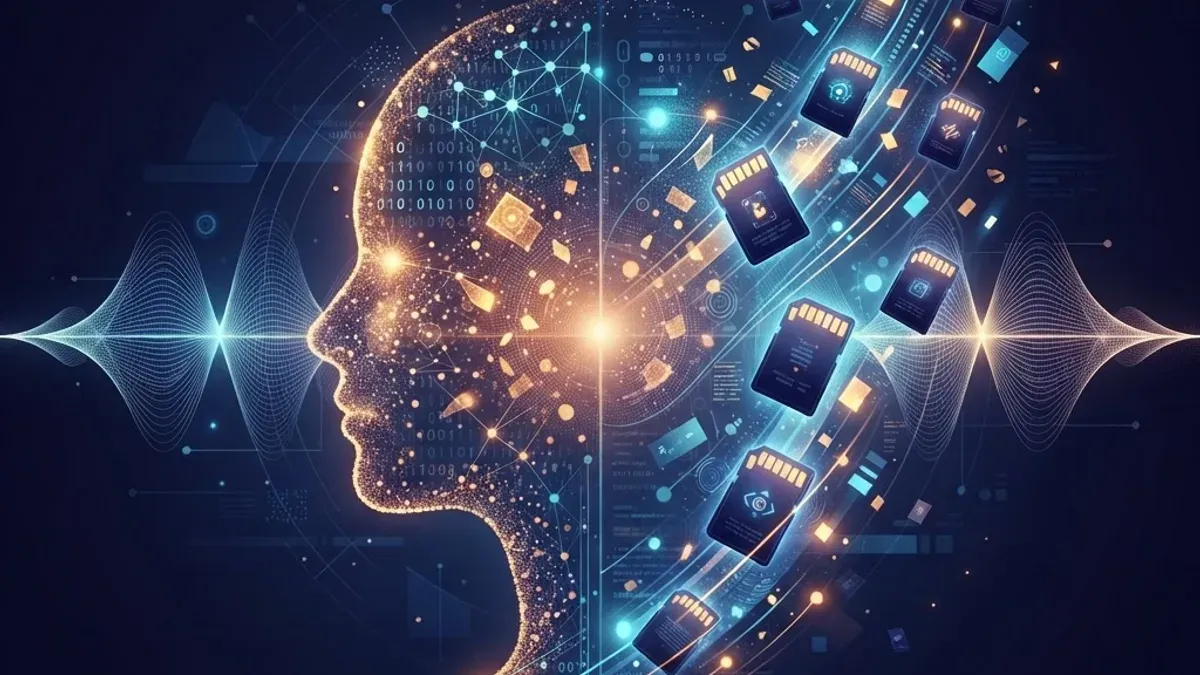
Human Archive AI: Preserving Memory With Machines
What is Human Archive AI? Explore how artificial intelligence preserves human memory, voices, and knowledge, the technology behind it, and its ethics.
Marcus Bennett
Author
For most of history, preserving a human life meant photographs, letters, and the fragile recollections of those who knew someone. Human Archive AI changes that equation. By capturing not just what a person said but how they thought, spoke, and reasoned, artificial intelligence is making it possible to build interactive, searchable, and even conversational records of individuals and institutions. The idea is both inspiring and unsettling, raising profound questions about memory, identity, and consent. This article explains what Human Archive AI is, how it works, where it is already being used, and the ethical questions it forces us to confront.
Table of Contents
- What is Human Archive AI? - How the technology works - Real-world applications - Benefits of archiving human knowledge - The ethical questions we cannot ignore - Building a human archive responsibly - The future of digital memory - Frequently Asked Questions - Conclusion
What Is Human Archive AI?
Human Archive AI refers to systems that collect, structure, and reproduce a person's knowledge, voice, personality, and memories using artificial intelligence. Rather than storing static files, these systems create dynamic archives you can interact with, asking questions and receiving answers in the subject's own style and voice. The goal is to preserve not merely information but the essence of how someone communicated and understood the world.
The concept spans a spectrum. At the simpler end, it organizes a lifetime of documents, photos, and recordings into a searchable knowledge base. At the more ambitious end, it trains models on a person's writing, interviews, and speech to generate new responses that sound authentically like them. Both approaches share a mission: to ensure that human experience and expertise are not lost when memory fades or a person passes away.
How the Technology Works
Building a human archive begins with data collection. The system gathers text, audio, video, and documents that capture how a person communicates, the stories they tell, the opinions they hold, and the knowledge they carry. The richer and more varied this material, the more faithful the archive becomes.
Next, the data is processed and structured so an AI model can learn from it. Natural language processing extracts meaning, voice synthesis captures vocal characteristics, and machine learning identifies patterns in reasoning and phrasing. The result is served through an interface, often a conversational one, that lets people query the archive naturally. Delivering that experience reliably depends on robust web applications and secure cloud solutions that can store sensitive personal data at scale while keeping it accessible and protected.
Real-World Applications
Human Archive AI is already appearing in several domains. Families use it to preserve the voices and stories of aging relatives, creating interactive memoirs that grandchildren can converse with long into the future. Museums and historical projects archive survivors of major events so their testimony remains vivid and questionable rather than frozen in a single recording.
In business, organizations capture the expertise of retiring specialists whose decades of judgment would otherwise walk out the door, turning it into a resource future employees can consult. Educators build archives of great thinkers and teachers, and healthcare researchers explore preserving patient histories in richer, more contextual ways. Across all these uses, the common value is continuity: knowledge and personality that once vanished can now persist, be searched, and keep contributing.
Benefits of Archiving Human Knowledge
The advantages are significant. For families, a human archive offers comfort and connection, letting future generations experience a relative's warmth and wisdom rather than only reading about them. For institutions, it protects irreplaceable expertise, reducing the disruption caused when key people leave or retire.
Society benefits too. Preserving diverse voices, especially those of underrepresented communities and eyewitnesses to history, guards against the erosion of collective memory. Archives also democratize access to knowledge, allowing anyone to learn from experts they could never meet in person. When paired with thoughtful content writing and clear presentation, these archives become not just data stores but living educational resources that inform, teach, and inspire across generations.
The Ethical Questions We Cannot Ignore
For all its promise, Human Archive AI raises hard questions. Consent is paramount: who has the right to build an archive of a person, and did that person agree to how it will be used? Reproducing someone's voice and personality after death is especially fraught, as they cannot approve new statements generated in their name.
Accuracy is another concern. An archive that generates plausible but fabricated responses risks putting words in a person's mouth, distorting their true views. There are also questions of ownership, privacy, and emotional impact, since interacting with a digital version of a lost loved one can complicate grief. Protecting these archives from misuse demands rigorous cybersecurity, and building them ethically requires clear boundaries about what the AI may and may not say. Technology alone cannot answer these questions; they require careful human judgment and transparent policy.
Building a Human Archive Responsibly
Responsible archiving starts with explicit, informed consent from the subject wherever possible, including agreement on how the archive may be used and by whom. Where the subject cannot consent, families and institutions should proceed with restraint and transparency, clearly labeling generated content as such rather than presenting it as verbatim truth.
Technically, the system should ground responses in verified source material, cite what it draws from, and decline to fabricate views it cannot support. Strong access controls, encryption, and data-governance practices protect the archive from misuse, and a dependable interface built with sound front-end web development ensures the experience is respectful and clear. Above all, responsible archives keep a human in the loop for sensitive decisions, treating the technology as a way to honor memory rather than to manufacture it.
The Future of Digital Memory
As models grow more capable, human archives will become more lifelike, interactive, and widespread. We may see personal archiving become a routine part of estate planning, with individuals curating their own digital legacies during their lifetimes to ensure accuracy and consent. Institutions will likely formalize knowledge-capture programs so expertise is preserved systematically rather than lost by accident.
Regulation will follow, defining rights over digital likeness, posthumous representation, and archive ownership. The most meaningful future is not one where AI pretends to be a person, but one where it faithfully preserves and organizes what a person genuinely left behind, making memory more durable and accessible without distorting it. Getting there responsibly will require collaboration between technologists, ethicists, and the families and communities whose stories are at stake, often guided by experienced artificial intelligence specialists.
Frequently Asked Questions
What is Human Archive AI?
Human Archive AI is technology that uses artificial intelligence to collect, structure, and reproduce a person's knowledge, voice, personality, and memories. Rather than storing static files, it creates interactive archives that people can query conversationally, receiving answers in the subject's own style, so human experience and expertise are preserved rather than lost.
How does Human Archive AI work?
It begins by gathering a person's text, audio, video, and documents, then processes that material using natural language processing, voice synthesis, and machine learning to capture how they communicate and reason. The result is delivered through an interface, often conversational, backed by secure cloud storage and web applications that keep the sensitive data protected and accessible.
Is Human Archive AI ethical?
It can be, but only with careful safeguards. The key ethical requirements are informed consent, accuracy grounded in verified sources, clear labeling of generated content, strong privacy protections, and restraint when representing people who cannot consent. Without these safeguards, archives risk misrepresenting individuals or being misused, so human oversight and transparent policy are essential.
Who uses Human Archive AI?
Families use it to preserve the stories and voices of relatives, museums and historical projects archive eyewitnesses to important events, and businesses capture the expertise of retiring specialists. Educators and researchers also use it to preserve knowledge and make it accessible, with the common goal of ensuring valuable human experience persists over time.
Can Human Archive AI recreate a deceased person?
It can reproduce how someone spoke and reasoned based on the material they left behind, but it cannot truly recreate a person or generate their genuine consent to new statements. Responsible systems ground responses in verified sources, avoid fabricating views, and clearly label content as AI-generated to respect the individual and the people who knew them.
Conclusion
Human Archive AI represents one of the most emotionally resonant applications of artificial intelligence: the preservation of memory, voice, and knowledge that would otherwise fade. Used well, it offers families connection, institutions continuity, and society a richer record of diverse human experience. Used carelessly, it risks distorting the very people it aims to honor. The path forward depends on consent, accuracy, security, and human judgment at every step. If you are exploring how to preserve knowledge or build a responsible archive, partner with an experienced artificial intelligence team that treats memory with the care it deserves.
Frequently Asked Questions
What is artificial intelligence and how does it work?
Artificial Intelligence (AI) refers to computer systems designed to perform tasks that typically require human intelligence. These tasks include learning, reasoning, problem-solving, perception, and language understanding. AI works through algorithms that process large amounts of data to identify patterns and make decisions.
How is AI changing industries in 2026?
AI is transforming industries through automation, predictive analytics, personalization, and enhanced decision-making. Healthcare uses AI for diagnostics, finance for fraud detection, manufacturing for quality control, and education for personalized learning experiences.
What Is Human Archive AI?
Human Archive AI refers to systems that collect, structure, and reproduce a person's knowledge, voice, personality, and memories using artificial intelligence. Rather than storing static files, these systems create dynamic archives you can interact with, asking questions and receiving answers in the subject's own style and voice. The goal is to preserve not merely information but the essence of how someone communicated and understood the world.
How does Human Archive AI work?
It begins by gathering a person's text, audio, video, and documents, then processes that material using natural language processing, voice synthesis, and machine learning to capture how they communicate and reason. The result is delivered through an interface, often conversational, backed by secure cloud storage and web applications that keep the sensitive data protected and accessible.
Is Human Archive AI ethical?
It can be, but only with careful safeguards. The key ethical requirements are informed consent, accuracy grounded in verified sources, clear labeling of generated content, strong privacy protections, and restraint when representing people who cannot consent. Without these safeguards, archives risk misrepresenting individuals or being misused, so human oversight and transparent policy are essential.
Who uses Human Archive AI?
Families use it to preserve the stories and voices of relatives, museums and historical projects archive eyewitnesses to important events, and businesses capture the expertise of retiring specialists. Educators and researchers also use it to preserve knowledge and make it accessible, with the common goal of ensuring valuable human experience persists over time.
Can Human Archive AI recreate a deceased person?
It can reproduce how someone spoke and reasoned based on the material they left behind, but it cannot truly recreate a person or generate their genuine consent to new statements. Responsible systems ground responses in verified sources, avoid fabricating views, and clearly label content as AI-generated to respect the individual and the people who knew them.
More from Technology
Continue exploring our curated collection of articles

SEO Computers: Choosing the Right Machine and Ranking a Computer Business Online
SEO computers explained two ways: the hardware specs that genuinely speed up SEO work, and how computer businesses rank for the searches that bring customers.

modern seo
How modern SEO actually works in the AI search era, based on 18 months of traffic data across 40 sites, including what stopped working and what never changed.

How AI Is Reshaping SEO and Content Marketing
Discover how AI is reshaping SEO and content marketing, from generative search and intent modeling to automated content workflows, E-E-A-T, and measurable results.