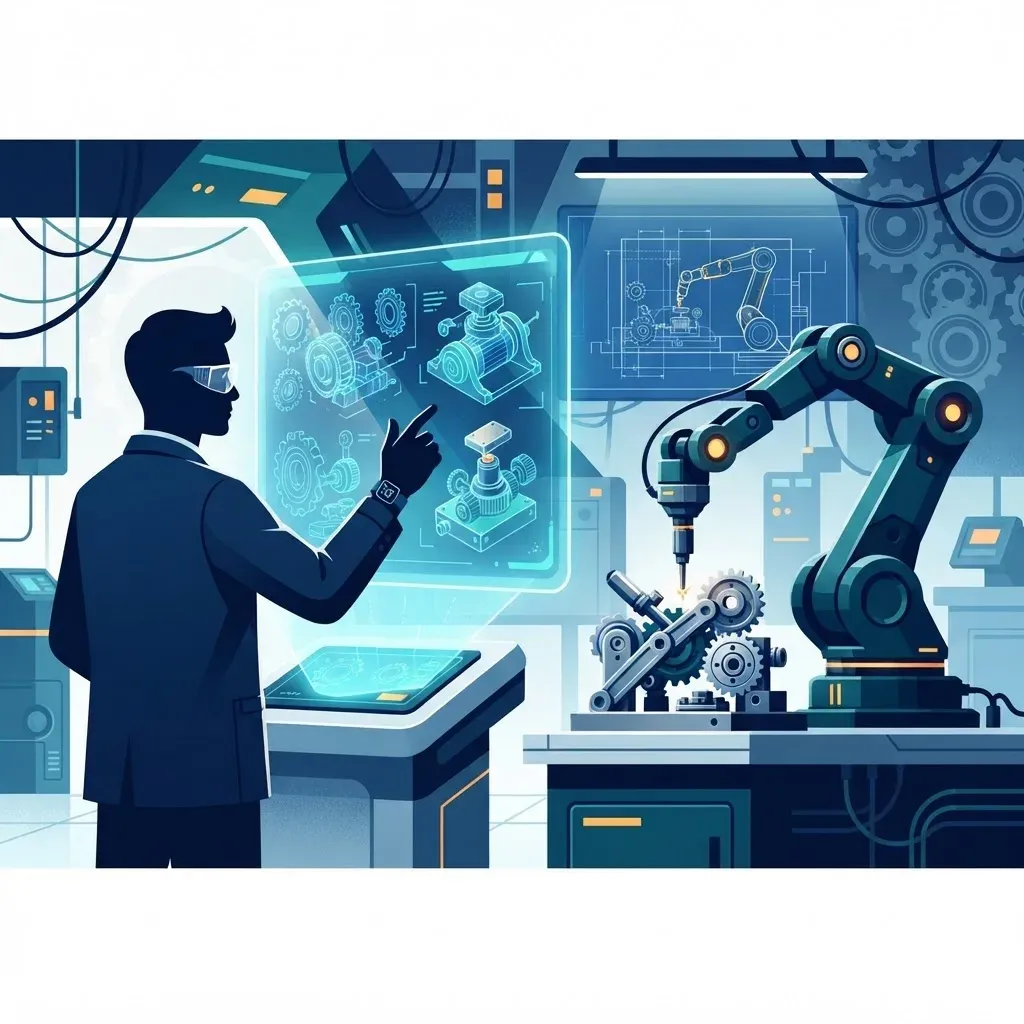
Will AI Replace Mechanical Engineers?
Will AI replace mechanical engineers? Explore what AI can and cannot do, which tasks are automated, and how engineers can stay indispensable in the AI era.
Priya Nair
Author
Few questions stir as much anxiety among engineering students and professionals as this one: will AI replace mechanical engineers? The honest answer is nuanced. Artificial intelligence is already transforming how mechanical engineers work, automating tedious calculations, generating design options, and accelerating simulation. But replacing the profession entirely is a very different claim from reshaping it. This article examines what AI genuinely does well, where it falls short, which tasks are most exposed to automation, and how mechanical engineers can position themselves to thrive rather than be displaced.
Table of Contents
- The short answer - What AI does well in mechanical engineering - What AI cannot replace - Tasks most and least exposed to automation - How the role of the mechanical engineer is evolving - Skills that keep engineers indispensable - Real-world examples - Frequently Asked Questions - Conclusion
The Short Answer
AI will not replace mechanical engineers wholesale, but it will replace certain tasks and reward engineers who learn to use it. The profession is shifting from manual execution toward supervision, judgment, and integration. Engineers who treat AI as a powerful assistant will become far more productive, while those who ignore it may find their narrow, repetitive skills devalued. In other words, AI is less a replacement and more a filter that separates engineers who adapt from those who do not.
What AI Does Well in Mechanical Engineering
Modern AI tools excel at tasks that are computationally intensive, pattern-heavy, or highly repetitive. Generative design is a striking example. Given constraints such as load, material, weight, and manufacturing method, generative algorithms can produce hundreds of viable geometries in minutes, many of which a human might never conceive. The engineer then evaluates and refines these options rather than drawing each one by hand.
Simulation and analysis are accelerating too. Machine learning surrogate models can approximate the results of computationally expensive finite element or fluid dynamics simulations, giving engineers rapid feedback during early design. Predictive maintenance systems analyze sensor data from machinery to forecast failures before they happen, a capability that is transforming manufacturing and industrial operations.
AI also streamlines documentation, code generation for automation scripts, and the tedious data wrangling that consumes so much engineering time. Companies investing in artificial intelligence capabilities are embedding these tools directly into engineering workflows, freeing skilled professionals to focus on higher-value problems.
What AI Cannot Replace
For all its strengths, AI has clear limits in mechanical engineering. It lacks genuine physical intuition. An experienced engineer can walk onto a factory floor, hear an unusual vibration, and diagnose a problem that no dataset captured. AI models only know what they were trained on; they struggle with truly novel situations and with the messy, ambiguous realities of physical systems.
Engineering is also deeply about responsibility and judgment. Someone must own the decision when a design affects human safety, and that accountability cannot be delegated to an algorithm. Ethical reasoning, stakeholder communication, and the ability to weigh trade-offs among cost, safety, sustainability, and manufacturability remain human strengths.
Finally, real engineering projects require cross-disciplinary collaboration and creativity. Defining the right problem, one that satisfies customers, regulators, and business goals, is often harder than solving it, and it demands context that AI does not possess. Turning a vague need into a buildable product still requires human insight, much as translating business goals into working software requires skilled web development teams rather than tools alone.
Tasks Most and Least Exposed to Automation
The tasks most exposed to automation are those that are repetitive and well-defined: routine drafting, standard component sizing, basic tolerance analysis, boilerplate documentation, and first-pass simulations. Engineers who spend most of their day on these activities should expect their work to change significantly.
The least exposed tasks are those requiring judgment, creativity, physical presence, and accountability: defining requirements, making safety-critical decisions, leading teams, communicating with clients, troubleshooting on-site failures, and integrating complex systems. The clear trend is that AI automates the execution of narrow tasks while amplifying the value of the human abilities that surround them.
How the Role of the Mechanical Engineer Is Evolving
Rather than disappearing, the mechanical engineer's role is expanding upward. Engineers are becoming orchestrators who define problems, configure AI tools, interpret their output critically, and take responsibility for final decisions. This is similar to how software did not eliminate accountants but transformed them from manual calculators into strategic advisors.
We are also seeing new hybrid roles emerge at the intersection of mechanical engineering and data science. Engineers who understand both physical systems and machine learning are in high demand, because they can build and validate the very AI tools that others use. The engineers who thrive will be those comfortable moving between the physical and digital worlds.
Skills That Keep Engineers Indispensable
To stay valuable in an AI-augmented profession, mechanical engineers should invest in a few key areas. First, develop fluency with AI and computational tools, learning to prompt, configure, and critically evaluate them rather than fearing them. Second, deepen domain expertise and physical intuition, the hard-won knowledge that lets you judge whether an AI-generated design is actually sound.
Third, strengthen the human skills that AI cannot replicate: communication, leadership, ethical judgment, and creative problem framing. Fourth, embrace continuous learning, because the tools will keep changing. Engineers who cultivate curiosity and adaptability will always find a place. Building a personal brand and portfolio, supported by a strong website design, can also help engineers showcase this evolving expertise to employers and clients.
Real-World Examples
Consider the automotive industry, where AI-driven generative design has produced lighter, stronger brackets and chassis components. Human engineers set the constraints, validated the results, and made the final manufacturing decisions, the AI expanded the option space but did not replace the decision-makers. In aerospace, machine learning surrogate models let teams explore far more design iterations within tight timelines, again with engineers steering the process.
In manufacturing plants, predictive maintenance systems now flag failing equipment days in advance. This has not eliminated maintenance engineers; it has made them more strategic, shifting them from reactive repairs to proactive reliability planning. Across these examples, the pattern is consistent: AI changes the work, elevates the humans who master it, and rarely removes the need for engineering judgment.
Frequently Asked Questions
Will AI completely replace mechanical engineers in the future?
No credible evidence suggests AI will fully replace mechanical engineers. AI is automating specific repetitive tasks and accelerating design and simulation, but the profession's core, judgment, accountability, physical intuition, and creative problem framing, remains human. The role is evolving toward supervision and integration rather than disappearing.
Which mechanical engineering tasks are most likely to be automated?
Routine drafting, standard component sizing, basic tolerance checks, boilerplate documentation, and first-pass simulations are the most exposed to automation because they are repetitive and well-defined. Engineers who rely mainly on these tasks should expand into higher-value work.
How can mechanical engineers stay relevant as AI advances?
Engineers stay relevant by learning to use AI tools fluently, deepening their domain expertise and physical intuition, strengthening communication and leadership skills, and committing to continuous learning. Those who treat AI as an assistant become significantly more productive and valuable.
Is it still worth studying mechanical engineering with AI on the rise?
Yes. Mechanical engineering remains a strong career, and AI increases the leverage of skilled engineers rather than eliminating the field. Students who combine core engineering fundamentals with computational and AI literacy will be especially well positioned.
Does AI create any new jobs in mechanical engineering?
Yes. AI is creating hybrid roles at the intersection of mechanical engineering and data science, including engineers who build, validate, and integrate AI tools for physical systems. Demand is rising for professionals who understand both the physical and digital sides of engineering.
Conclusion
So, will AI replace mechanical engineers? Not in any realistic sense. AI is automating narrow tasks and transforming workflows, but it amplifies rather than eliminates the value of engineering judgment, creativity, and accountability. The engineers at risk are those who refuse to adapt; the engineers who embrace AI as a collaborator will be more productive and more valuable than ever. If your organization wants to integrate AI intelligently into engineering and technical operations, work with an experienced artificial intelligence partner to build tools that empower your people rather than replace them.
Frequently Asked Questions
Will AI completely replace mechanical engineers in the future?
No credible evidence suggests AI will fully replace mechanical engineers. AI is automating specific repetitive tasks and accelerating design and simulation, but the profession's core, judgment, accountability, physical intuition, and creative problem framing, remains human. The role is evolving toward supervision and integration rather than disappearing.
Which mechanical engineering tasks are most likely to be automated?
Routine drafting, standard component sizing, basic tolerance checks, boilerplate documentation, and first-pass simulations are the most exposed to automation because they are repetitive and well-defined. Engineers who rely mainly on these tasks should expand into higher-value work.
How can mechanical engineers stay relevant as AI advances?
Engineers stay relevant by learning to use AI tools fluently, deepening their domain expertise and physical intuition, strengthening communication and leadership skills, and committing to continuous learning. Those who treat AI as an assistant become significantly more productive and valuable.
Is it still worth studying mechanical engineering with AI on the rise?
Yes. Mechanical engineering remains a strong career, and AI increases the leverage of skilled engineers rather than eliminating the field. Students who combine core engineering fundamentals with computational and AI literacy will be especially well positioned.
Does AI create any new jobs in mechanical engineering?
Yes. AI is creating hybrid roles at the intersection of mechanical engineering and data science, including engineers who build, validate, and integrate AI tools for physical systems. Demand is rising for professionals who understand both the physical and digital sides of engineering.
More from Career
Continue exploring our curated collection of articles

AI Attorney Jobs: Careers in Legal Tech for 2026
Explore AI attorney jobs in 2026, the emerging legal-tech roles, skills required, salary outlook, and how lawyers can build AI-powered legal careers.

Using AI for User Experience Design Jobs in 2026
Learn how to use AI for user experience design jobs in 2026, the tools reshaping UX work, the new skills required, and how designers stay indispensable.
Are Engineering Jobs at Risk From AI?
Are engineering jobs at risk from AI? Explore which engineering roles are exposed, which remain safe, and how engineers can future-proof their careers.