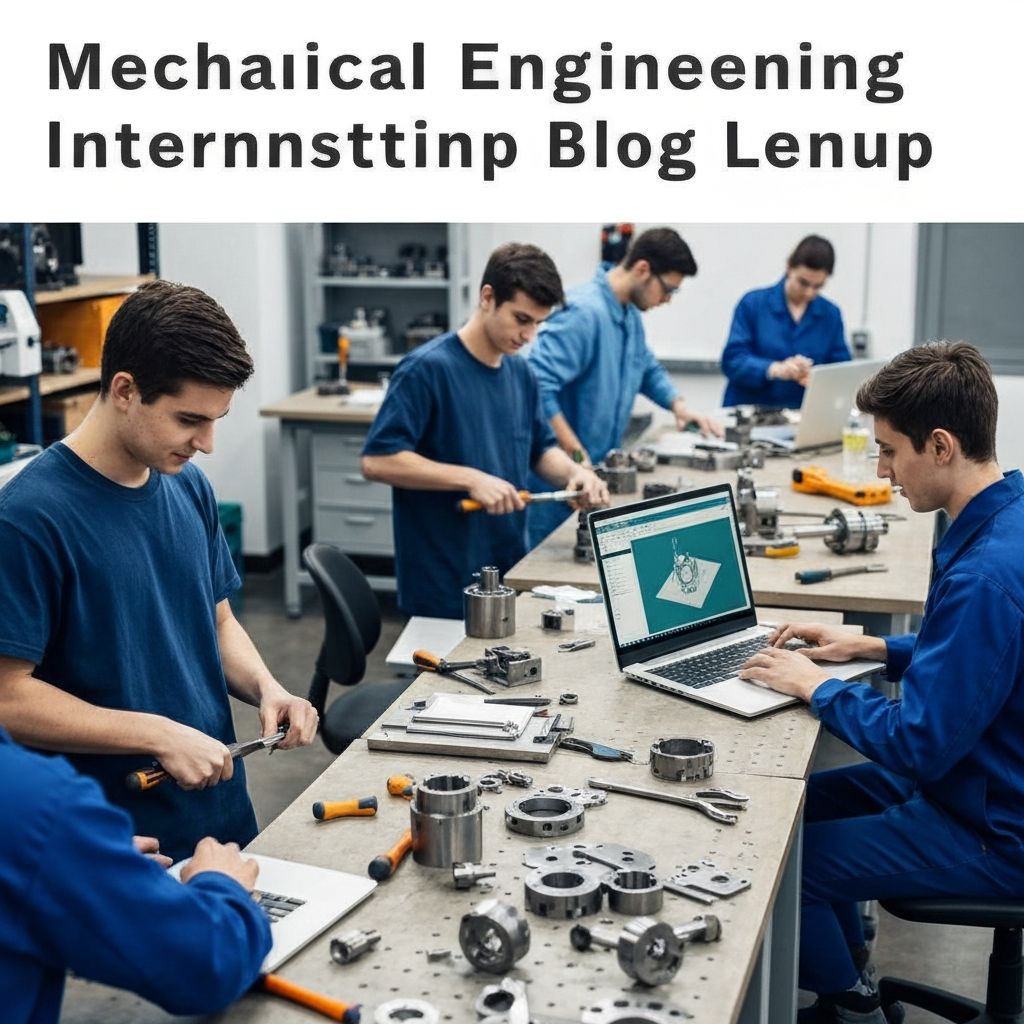
Mechanical Engineering Internships: Your Pathway to Career Success
Explore how mechanical engineering internships bridge academic learning and professional practice, offering valuable hands-on experience that accelerates career development.
Dr. Robert Mitchell
Author
Mechanical engineering internships represent far more than resume fillers for college students. These critical professional experiences serve as bridges between theoretical academic knowledge and practical engineering application, fundamentally shaping career trajectories and professional competencies. This comprehensive exploration examines why internships matter for mechanical engineers, how to secure meaningful opportunities, what to expect during internship experiences, and how to maximize the professional growth available through these formative roles.
Why Mechanical Engineering Internships Matter
The transition from classroom to professional practice represents one of the most significant challenges mechanical engineering graduates face. While academic programs provide essential theoretical foundations, they cannot fully replicate the complexities, constraints, and collaborative dynamics of actual engineering work. Internships fill this critical gap by exposing students to real-world engineering challenges, professional practices, and industry expectations while still maintaining the safety net of educational oversight.
Employers consistently rate practical experience as one of the most valued qualifications when hiring entry-level engineers. A mechanical engineering graduate with relevant internship experience immediately demonstrates capabilities that extend beyond theoretical knowledge. They understand industry standards, have experience with professional software tools, recognize practical design constraints, and appreciate the business contexts that influence engineering decisions.
Beyond career preparation, internships provide invaluable networking opportunities. Many engineers secure full-time employment with organizations where they completed internships or through connections made during those experiences. The professional relationships developed during internships often extend throughout entire careers, providing mentorship, collaboration opportunities, and career advancement possibilities.
Types of Mechanical Engineering Internships
The internship landscape encompasses diverse opportunities suited to different interests and career objectives. Product development internships place students within teams designing and developing new products or product iterations. These positions expose engineers to the complete product lifecycle from conceptualization through manufacturing, providing comprehensive understanding of how ideas transform into market-ready solutions.
Manufacturing internships focus on production optimization, quality assurance, and operational efficiency. Students working in manufacturing environments learn how theoretical designs translate into actual production, understand manufacturing constraints that influence design decisions, and gain insight into process improvement methodologies that drive manufacturing excellence.
Research and development internships place students in positions where they explore new materials, test innovative approaches, and develop next-generation technologies. These opportunities suit students interested in advanced engineering, emerging technologies, or fundamental scientific exploration. R&D internships often involve more experimental work and less immediate commercial application compared to product development positions.
Energy and power systems internships expose students to thermal systems, power generation, alternative energy technologies, and efficiency optimization. With increasing focus on sustainable energy solutions, these internships provide exposure to transformative engineering challenges and career fields projected for significant growth.
Design and analysis internships center on CAD modeling, finite element analysis, structural optimization, and computational modeling. These positions develop specialized technical skills while exposing students to the analysis methodologies that inform engineering decisions throughout product development.
Consulting internships place students within engineering consulting firms, exposing them to diverse client challenges, varied technical problems, and the business models underlying consulting practices. These experiences develop adaptability and breadth of technical knowledge while introducing students to client service and project management.
Securing Meaningful Internship Opportunities
Competitive internship positioning begins long before applying. Developing strong academic records, particularly in core mechanical engineering courses, demonstrates technical competency to potential employers. Engagement in extracurricular engineering activities, design competitions, or student projects provides evidence of genuine engineering passion and practical capabilities beyond classroom performance.
Networking represents one of the most effective internship acquisition strategies. Attending industry conferences, participating in professional society events, and connecting with alumni working in your target industries creates relationships that can lead to internship opportunities. Many organizations fill internships through personal recommendations and established networks rather than public job postings.
Developing a portfolio demonstrating engineering capabilities accelerates the internship search. Portfolios showcasing class projects, design competition work, or personal engineering projects provide tangible evidence of technical skills and creative problem-solving. Digital portfolios have become increasingly expected, with personal websites or GitHub repositories hosting project documentation, analysis results, and design innovations.
Application materials deserve meticulous attention. Cover letters should demonstrate specific knowledge about the organization and articulate how the internship aligns with personal career objectives. Resumes should highlight relevant coursework, technical skills, and project experience rather than generic work history. Tailoring application materials to each opportunity significantly improves success rates compared to generic mass applications.
Interview Preparation and Technical Assessment
Most mechanical engineering internships require technical interviews assessing both theoretical knowledge and problem-solving capabilities. Preparation requires reviewing fundamental concepts including mechanics, thermodynamics, materials science, and machine design. Understanding how these fundamentals apply to real-world challenges demonstrates engineering maturity beyond surface-level knowledge.
Case-based interviews present engineering challenges requiring thoughtful analysis and structured problem-solving. Practicing approaching unfamiliar problems systematically, identifying key information, making reasonable assumptions, and walking through analysis logically develops skills that differentiate strong candidates. Many candidates fail not because they cannot solve problems but because they cannot clearly communicate their thinking and reasoning processes.
Technical portfolio discussions often accompany interviews. Being thoroughly familiar with every project included in your portfolio is essential. Interviewers will explore projects in depth, asking about decisions made, challenges encountered, and lessons learned. Vague project descriptions or inability to discuss technical details undermine confidence in claimed capabilities.
Maximizing Internship Experiences
Once secured, internship success requires active engagement and intentional learning. The first weeks typically involve orientation, administrative tasks, and fundamental technical familiarization. Use this period to thoroughly understand the organization's business model, how your department contributes to organizational objectives, and where your internship position fits within broader operations.
Seek clarity about internship objectives and expectations early. What specific projects or responsibilities constitute your primary internship focus? What skills are you expected to develop? What outcomes would represent successful internship completion? Clear understanding of expectations allows you to focus effort on meaningful accomplishments.
Proactive problem identification demonstrates engineering initiative. Rather than waiting for assignment, observe operations, identify inefficiencies, and propose improvements. Many memorable internships result from interns suggesting valuable projects that extended initial responsibilities. Initiatives that create tangible value leave lasting impressions with supervisors and colleagues.
Technical skill development requires deliberate focus. Whether learning specific CAD software, mastering analysis tools, or understanding industry-specific processes, dedicate time to skill acquisition. Many internships have formal training schedules; maximize these opportunities by asking questions, practicing techniques, and exploring tool capabilities beyond minimum requirements.
Mentorship and Professional Development During Internships
The relationships developed during internships often provide career-long value. Identifying senior engineers or mentors who are willing to guide your professional development accelerates learning. These relationships can involve regular meetings for guidance, reviews of your work, or informal advice about career development and professional growth.
Exposure to diverse engineering perspectives enriches professional development. Conversations with engineers in different specialties, with varying career trajectories, or working in different industries provide insights into diverse career paths and evolving industry trends. These conversations help clarify your own professional interests and preferences.
Seeking feedback actively throughout internships enables rapid improvement. Ask supervisors to assess your work quality, identify areas for development, and suggest improvement strategies. Receptiveness to constructive feedback and demonstrated commitment to improvement leave positive impressions and accelerate professional growth.
Building a Portfolio from Internship Work
Internship experiences provide excellent portfolio material for future opportunities. With appropriate permissions and confidentiality considerations, document projects you worked on, analysis you completed, and designs you contributed to. Photographs, drawings, analysis results, and process documentation create compelling evidence of practical engineering capabilities.
Securing letters of recommendation from internship supervisors provides valuable professional validation. Request recommendations while still working at the organization, ensuring supervisors have fresh memories of your contributions and capabilities. Strong recommendations from recognized organizations carry significant weight in future job applications or academic program admissions.
Transitioning from Internship to Full-Time Employment
Many mechanical engineers secure full-time positions with organizations where they completed internships. The advantages of this transition are substantial. Employers understand your capabilities through direct observation, you understand organizational culture and technical practices, and you have established relationships throughout the organization.
If pursuing full-time opportunities with your internship organization, maintain exceptional performance throughout your internship. Demonstrate reliability, quality work, and professional maturity. Communicate interest in full-time opportunities to supervisors and human resources, asking about timelines and processes for transitioning to permanent positions.
Even if full-time opportunities don't materialize with your internship organization, the experience and relationships provide advantages for pursuing opportunities elsewhere. The skills developed, confidence gained, and professional network expanded through internship experiences position you competitively for meaningful entry-level engineering roles.
Overcoming Common Internship Challenges
Some interns encounter challenging experiences including boring assignments, unclear expectations, or difficult supervisors. Addressing these challenges requires communication and problem-solving. If assignments don't seem valuable, ask supervisors about learning objectives and how assignments contribute to broader technical development.
When interpersonal challenges arise, address them constructively. Many difficulties stem from communication misunderstandings rather than fundamental problems. Clarifying expectations, seeking feedback, and demonstrating commitment to improvement often resolves tensions before they become serious issues.
Conclusion
Mechanical engineering internships represent invaluable professional development opportunities that shape engineering careers and professional trajectories. These formative experiences develop technical skills, build professional networks, and provide insights into actual engineering practice that academic programs cannot replicate. By approaching internships with intentional focus on learning and professional growth, mechanical engineers can transform these temporary positions into launching pads for rewarding, impactful careers. The engineers who thrive in professional practice typically recognize that their internship experiences represent just the beginning of continuous professional development and lifelong learning that characterizes successful engineering careers.
More from Career
Continue exploring our curated collection of articles

AI Attorney Jobs: Careers in Legal Tech for 2026
Explore AI attorney jobs in 2026, the emerging legal-tech roles, skills required, salary outlook, and how lawyers can build AI-powered legal careers.

Using AI for User Experience Design Jobs in 2026
Learn how to use AI for user experience design jobs in 2026, the tools reshaping UX work, the new skills required, and how designers stay indispensable.

Are Engineering Jobs at Risk From AI?
Are engineering jobs at risk from AI? Explore which engineering roles are exposed, which remain safe, and how engineers can future-proof their careers.