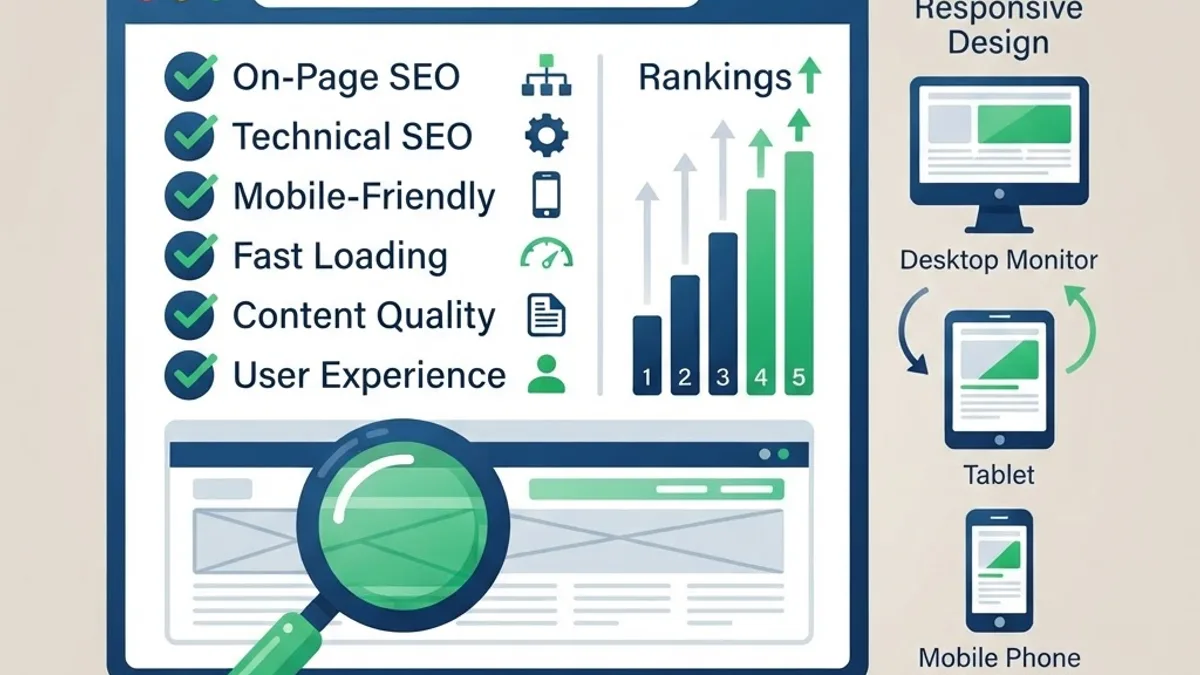
10 SEO-Friendly Web Design Rules to Live By
Follow these 10 SEO-friendly web design rules to build a site that ranks: mobile-first layouts, fast speed, clean structure, semantic HTML, and more.
Marcus Feldman
Author
Design and SEO are often treated as separate disciplines handled by different people, but the truth is that great search performance begins with great design decisions. The way a site is structured, how fast it loads, how content is organized, and how easily search engines can understand it all trace back to choices made during design. When design and SEO work together from the start, you build a website that both delights users and ranks well. Here are ten SEO-friendly web design rules to live by, each explained with practical guidance you can apply today.
Rule 1: Design Mobile-First
Because search engines rank sites primarily based on their mobile experience, every design decision should start with the smallest screen. Plan layouts, navigation, and content order for mobile, then enhance for larger displays. Ensure text is legible without zooming and buttons are large enough to tap comfortably.
A mobile-first approach guarantees your most important content and links are fully available where search engines look first. Skilled front-end web development turns mobile-first designs into responsive layouts that perform beautifully everywhere, protecting both usability and rankings.
Rule 2: Prioritize Page Speed
Speed is a ranking factor and a usability essential. Slow pages frustrate visitors and drag down search performance. Optimize images, minimize unnecessary scripts, use efficient code, and leverage modern loading techniques to keep pages fast on every connection.
Design choices heavily influence speed. Heavy backgrounds, oversized images, and excessive animations all add weight. Building performance into the design, and using performance-focused approaches from Next JS web development, ensures your beautiful site also loads quickly and scores well on Core Web Vitals.
Rule 3: Use a Clear, Logical Site Structure
Search engines and users both rely on clear structure to understand a website. Organize content into a logical hierarchy, group related pages, and keep important content within a few clicks of the homepage. A shallow, well-organized structure helps search engines crawl and index your pages efficiently.
Good information architecture, planned during website design, also improves internal linking and helps distribute authority across your site. When visitors and crawlers can navigate intuitively, everyone benefits, and your most valuable pages get the visibility they deserve.
Rule 4: Write Semantic, Clean HTML
Under the surface, the quality of your markup matters enormously. Use semantic HTML elements, proper heading levels, and clean structure so search engines can interpret your content accurately. A single, descriptive main heading per page, followed by logical subheadings, clarifies hierarchy for both crawlers and assistive technologies.
Semantic markup is the foundation of both SEO and accessibility. It requires no visible change to the design but dramatically improves how search engines understand your pages. Expert web development ensures your visual design is backed by the clean, standards-compliant code that search engines reward.
Rule 5: Optimize Every Image
Images enrich a site but can also slow it down and confuse crawlers if handled carelessly. Compress images, size them appropriately, use modern formats, and provide descriptive alt text so search engines understand what each image depicts. Lazy-load offscreen media to speed up initial load.
Descriptive filenames and alt text also help images appear in image search, opening another channel of traffic. Combining optimized visuals with professional graphic design and infographic design gives you imagery that is both compelling and search-friendly.
Rule 6: Make Navigation Simple and Crawlable
Navigation should help users find what they need and help search engines discover every important page. Use clear, descriptive labels and standard link elements that crawlers can follow. Avoid burying key pages deep in the structure or hiding links behind scripts that search engines cannot parse.
Simple, crawlable navigation improves both user experience and indexing. When search engines can easily follow your links, they discover and rank your content faster. Thoughtful navigation design is a quiet but powerful contributor to overall digital marketing success.
Rule 7: Design for Readability
Readable content keeps visitors engaged, and engagement signals support rankings. Use legible fonts, comfortable sizes, strong contrast, generous line height, and reasonable line length. Break content into scannable sections with clear headings so visitors can find what they need quickly.
Readability also encourages people to consume more of your content, increasing time on page and reducing bounces. Pairing readable design with high-quality content writing ensures visitors both want to read and are able to read your message comfortably.
Rule 8: Build in Accessibility
Accessibility and SEO overlap significantly. Descriptive alt text, semantic structure, keyboard operability, and strong contrast help both assistive technologies and search engines. Designing accessibly expands your audience while improving how search engines interpret your content.
Because accessible sites tend to be cleaner, faster, and better structured, they often perform better in search as a natural result. Treating accessibility as a core design rule, rather than an afterthought, delivers benefits for users and rankings alike.
Rule 9: Create Unique, Purposeful Titles and Descriptions
Every page should have a unique, descriptive title and meta description that accurately reflect its content and encourage clicks from search results. While designers may not write every word, the design process should account for where and how these elements appear and ensure the structure supports them.
Titles and descriptions are often a searcher's first impression of your site, so they influence click-through rates. Coordinating design with a solid content and digital marketing strategy ensures these vital elements are never overlooked during the build.
Rule 10: Plan for Ongoing Optimization
SEO is never finished. Design your site so it is easy to update, expand, and refine over time. Use a flexible content structure, a maintainable design system, and a technology stack that supports growth. This makes it simple to add content, improve pages, and respond to changing search expectations.
Ongoing optimization depends on reliable website maintenance and support and a willingness to iterate based on data. Sites that are built to evolve consistently outperform those that are treated as one-time projects, because search success compounds over time.
Bringing the Rules Together
Individually, each rule improves some aspect of your site. Together, they create a website that is fast, accessible, well-structured, and genuinely helpful, exactly the kind of site search engines aim to reward. The key insight is that SEO is not something sprinkled on at the end; it is woven into every design and development decision from the beginning.
Businesses that internalize these rules build lasting search performance rather than chasing quick fixes. Whether you are launching a new site or refining an existing one, applying these principles consistently, with support from experienced web development professionals, positions your website for sustainable organic growth.
Frequently Asked Questions
What makes a website design SEO-friendly?
An SEO-friendly design is mobile-first, fast, well-structured, and built on clean semantic HTML. It features crawlable navigation, optimized images, readable content, accessibility, and unique page titles and descriptions. Crucially, it is designed to be maintained and improved over time. These elements help search engines understand and rank the site while serving users well.
Does web design really affect SEO rankings?
Yes, significantly. Design decisions determine page speed, mobile usability, site structure, semantic markup, and accessibility, all of which influence rankings. A visually appealing site with poor structure or slow performance will struggle to rank, while a well-designed, technically sound site gives your content the best chance to succeed.
How important is mobile-first design for SEO?
It is essential. Search engines use mobile-first indexing, meaning they evaluate the mobile version of your site to determine rankings. A design that works poorly on mobile will hurt your search performance even for desktop searches, so designing mobile-first is one of the most important SEO rules to follow.
Can improving web design boost my existing rankings?
Often, yes. Improving page speed, mobile usability, site structure, readability, and accessibility can lift rankings for an existing site. Because these factors directly affect how search engines evaluate your pages and how users engage, thoughtful design improvements frequently produce measurable gains in visibility and traffic.
How does accessibility relate to SEO in web design?
Accessibility and SEO overlap heavily. Practices like descriptive alt text, semantic HTML, clear structure, and strong contrast help both assistive technologies and search engines understand your content. Accessible sites are typically cleaner and better structured, so designing for accessibility usually improves search performance as well.
Conclusion
These ten SEO-friendly web design rules, from mobile-first layouts and fast performance to clean structure, semantic markup, and ongoing optimization, form a blueprint for building websites that rank and convert. The common thread is that SEO and design are inseparable; the best-performing sites are those where search considerations shape every decision from the start. Apply these rules consistently, and your website will earn lasting visibility. When you are ready to build a site engineered for search success, partner with a professional website design team that lives by these principles every day.
Frequently Asked Questions
What is SEO and why is it important?
SEO (Search Engine Optimization) is the practice of optimizing websites to rank higher in search engine results. It's important because higher rankings lead to more organic traffic, increased brand visibility, and better conversion rates without paying for advertising.
How long does SEO take to show results?
SEO typically takes 3-6 months to show significant results, though some improvements can be seen within weeks. The timeline depends on factors like website authority, competition level, content quality, and the consistency of optimization efforts.
What makes a website design SEO-friendly?
An SEO-friendly design is mobile-first, fast, well-structured, and built on clean semantic HTML. It features crawlable navigation, optimized images, readable content, accessibility, and unique page titles and descriptions. Crucially, it is designed to be maintained and improved over time. These elements help search engines understand and rank the site while serving users well.
Does web design really affect SEO rankings?
Yes, significantly. Design decisions determine page speed, mobile usability, site structure, semantic markup, and accessibility, all of which influence rankings. A visually appealing site with poor structure or slow performance will struggle to rank, while a well-designed, technically sound site gives your content the best chance to succeed.
How important is mobile-first design for SEO?
It is essential. Search engines use mobile-first indexing, meaning they evaluate the mobile version of your site to determine rankings. A design that works poorly on mobile will hurt your search performance even for desktop searches, so designing mobile-first is one of the most important SEO rules to follow.
Can improving web design boost my existing rankings?
Often, yes. Improving page speed, mobile usability, site structure, readability, and accessibility can lift rankings for an existing site. Because these factors directly affect how search engines evaluate your pages and how users engage, thoughtful design improvements frequently produce measurable gains in visibility and traffic.
How does accessibility relate to SEO in web design?
Accessibility and SEO overlap heavily. Practices like descriptive alt text, semantic HTML, clear structure, and strong contrast help both assistive technologies and search engines understand your content. Accessible sites are typically cleaner and better structured, so designing for accessibility usually improves search performance as well.
More from Digital Marketing
Continue exploring our curated collection of articles

Guaranteed Search Engine Optimization: What a Real Guarantee Actually Covers
Guaranteed search engine optimization sounds risky, and often is. Here is how to tell a real performance guarantee from a sales trick, with contract terms that hold.

Healthcare Search Engine Optimization: A Patient Acquisition Playbook That Respects Compliance
A practical healthcare search engine optimization playbook covering YMYL content standards, service line structure, local visibility, and privacy-safe measurement.

Las Vegas Search Engine Optimization: Winning a Market Built on Transient Demand
Las Vegas search engine optimization demands tactics built for tourists, locals, and event spikes. Here is the market-specific playbook that actually converts.