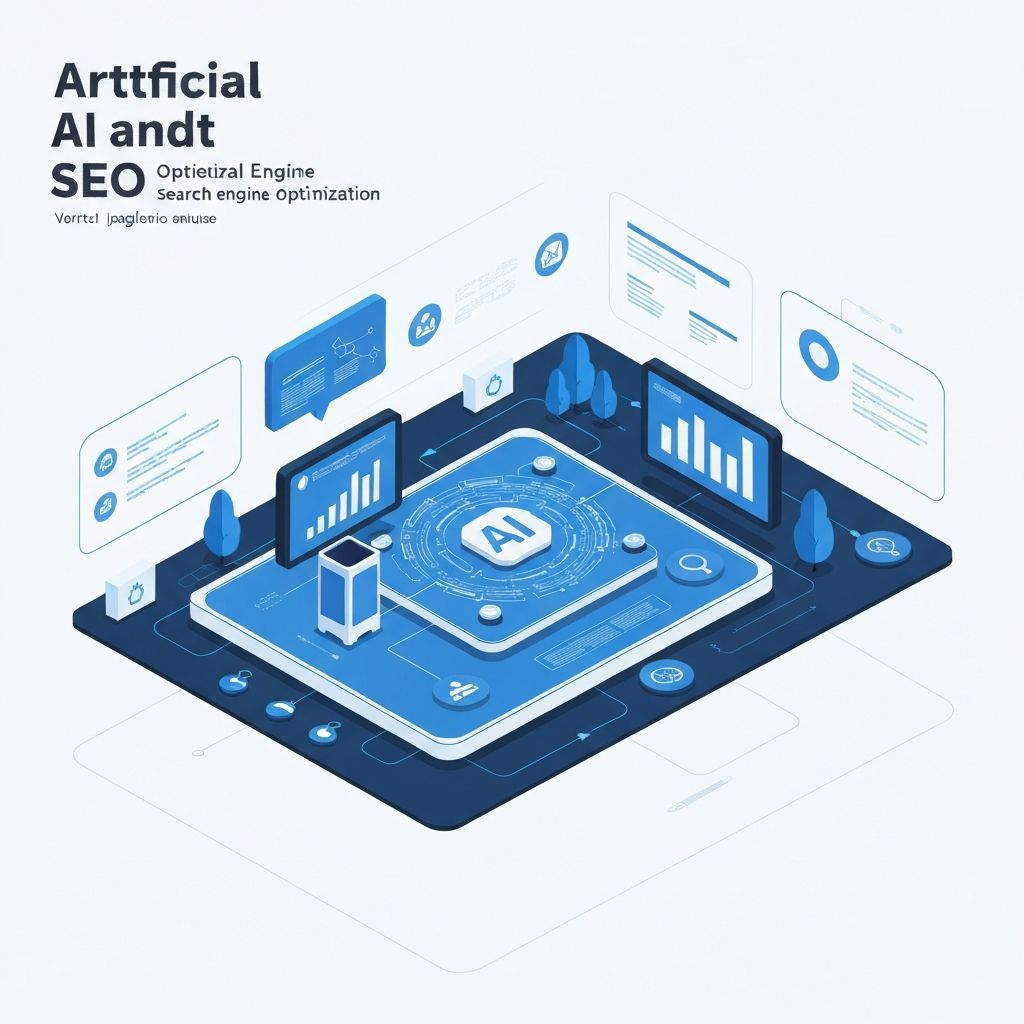
Artificial Intelligence and Search Engine Optimization: Transforming Digital Visibility
Explore how AI is revolutionizing SEO strategies, content optimization, and search engine algorithms, enabling businesses to achieve unprecedented digital visibility and ranking.
Sarah Thompson
Author
The intersection of artificial intelligence and search engine optimization represents one of the most significant transformations in digital marketing history. What began as keyword-driven, link-counting optimization evolved into sophisticated strategies leveraging AI to understand search intent, create resonant content, and align with increasingly intelligent ranking algorithms. Organizations embracing AI-powered SEO capabilities achieve digital visibility and traffic growth far exceeding traditional optimization approaches.
The Evolution of SEO and AI's Role
Early SEO focused on keyword density and link quantity, treating search engine optimization as gaming algorithmic weaknesses rather than providing genuine user value. Search engines countered with increasingly sophisticated algorithms, fundamentally shifting SEO from technical tricks toward genuine quality content serving user needs.
Artificial intelligence accelerated this evolution, enabling search engines to understand semantic meaning, evaluate content quality with nuance, and assess true user satisfaction. Machine learning algorithms analyze how users interact with search results, determining which pages genuinely satisfy search intent. This shift fundamentally changed how organizations should approach SEO.
Modern SEO requires understanding AI-driven ranking factors, creating content aligned with sophisticated user intent recognition, and building authority signals that algorithmic systems identify as legitimate. Organizations struggling with AI-transformed SEO typically approached the technology as an additional tool rather than recognizing fundamental algorithmic transformation.
AI-Powered Content Understanding and Creation
AI systems now understand content quality with remarkable sophistication, recognizing shallow, AI-generated spam content versus substantive, authoritative information. Search engines employ machine learning to evaluate comprehensive coverage of topics, originality of perspective, and accuracy of information provided.
Leading organizations leverage AI for content strategy and creation. AI systems analyze thousands of top-ranking pages for specific keywords, identifying content patterns, structure approaches, and comprehensiveness levels successful pages demonstrate. This analysis informs content strategy, ensuring new content competes effectively on comprehensiveness, structure, and information organization.
Content creators increasingly employ AI writing assistants, generating initial drafts that experienced writers refine into polished, original content. This collaboration accelerates content creation while maintaining quality standards. AI reduces routine writing tasks, enabling writers to focus on research, original insights, and content strategy.
Content optimization tools powered by AI analyze how page content could be enhanced for search rankings. They identify missing topics, suggest section restructuring, and recommend content updates increasing topical comprehensiveness and user satisfaction. These tools enable continuous content improvement rather than treating published content as static.
Search Intent Understanding and Keyword Strategy
AI enables understanding search intent at unprecedented depth. Systems analyze search queries, recognize underlying user needs, and determine what type of content satisfies different intent variations. This understanding goes far beyond simple keyword matching to sophisticated comprehension of what different users seek when submitting similar queries.
Keyword research tools powered by AI provide insights far exceeding simple search volume data. They identify high-value keywords with lower competition, reveal keyword clusters representing similar search intents, and project search volume trends. SEO professionals leverage these insights to target opportunities where valuable traffic becomes achievable.
Long-tail keyword identification represents a particular strength of AI-powered keyword tools. Rather than targeting highly competitive head terms, strategies increasingly focus on numerous lower-volume keywords with specific intent indicators. The cumulative traffic from numerous well-targeted long-tail keywords often exceeds head term acquisition costs.
Technical SEO and Site Architecture Optimization
AI improves technical SEO through automated site analysis identifying technical problems affecting search rankings. Systems crawl entire websites, identifying broken links, duplicate content, slow-loading pages, and structural issues undermining search performance. This automated analysis catches problems human reviewers might miss while scaling analysis across massive sites.
Machine learning algorithms analyze how search engines crawl and index website content, optimizing site structure to facilitate indexing efficiency. AI tools recommend JavaScript optimization, server rendering approaches, and crawl efficiency improvements ensuring search engines effectively discover and index site content.
Internal linking optimization represents another area where AI adds significant value. Systems analyze topical relationships across site pages, recommend internal links connecting related content, and identify orphaned content failing to link to relevant pages. Improved internal linking facilitates search engine crawling while providing users intuitive navigation.
Link Building and Authority Development
Sophisticated AI systems identify high-quality linking opportunities aligned with organizational relevance. Rather than pursuing any possible backlinks, tools identify sites where links provide genuine authority signals search engines recognize as legitimate. Machine learning distinguishes between genuine authority signals and manipulative link schemes algorithms penalize.
Content analysis tools identify which content types and topics attract the most linking, enabling organizations to focus efforts on creating content likely to earn natural links. These insights guide content strategy toward topics generating organic sharing and linking behaviors.
User Experience and Ranking Factor Integration
Google's emphasis on Core Web Vitals reflects recognition that page experience significantly influences ranking positions. AI tools analyze website performance against these metrics, identifying optimization opportunities improving loading speed, responsiveness, and visual stability. These technical improvements directly influence search rankings while improving user experience.
AI systems track user engagement metrics on pages, analyzing bounce rates, time-on-page, and click-through patterns. This data reveals content quality issues users encounter, informing optimization priorities. Pages with poor engagement metrics may indicate content inadequately addressing user needs, necessitating refinement.
Competitive Analysis and Market Positioning
AI-powered competitive analysis provides insights into competitor SEO strategies, content approaches, and keyword targeting. Organizations analyze competitor strengths and weaknesses, identifying opportunities where superior content or technical optimization could capture ranking positions. This intelligence informs both defensive strategies protecting rankings and offensive strategies claiming competitor territory.
Keyword gap analysis identifies terms competitors rank for but organizations don't, highlighting opportunities for expansion. Conversely, organizations identify keywords where they rank strongly but competitors don't, revealing defensible competitive advantages.
Local SEO and Geographic Targeting
AI enhances local SEO through improved location data understanding and geographic intent recognition. Businesses optimize for location-specific searches, ensuring visibility when nearby customers search for relevant products or services. AI systems manage location data across multiple platforms, ensuring consistency signaling business legitimacy to search algorithms.
Predictive Analytics and Ranking Forecasting
Machine learning models predict ranking positions based on current signals, enabling organizations to project outcomes of SEO initiatives. These predictions help prioritize improvements where greatest ranking gains become achievable. Forecasting enables realistic timeline expectations and ROI calculations for SEO investments.
The Future of AI-Enhanced SEO
As algorithms continue advancing, SEO will increasingly require sophisticated AI capabilities. Voice search optimization will intensify as voice assistant usage grows. AI systems already optimize for conversational queries and featured snippets. Emerging search technologies, including visual search and semantic web capabilities, will require continued adaptation.
Organizations investing in AI-powered SEO capabilities will gain competitive advantages difficult for competitors to replicate. The barrier to SEO success increasingly reflects analytical capability, not manual effort or short-term tactics.
Conclusion
The integration of artificial intelligence with search engine optimization represents a fundamental transformation in how organizations achieve digital visibility. Success now requires understanding sophisticated ranking algorithms, creating content genuinely satisfying user intent, and leveraging AI tools for continuous optimization. Organizations embracing AI-enhanced SEO strategies achieve digital visibility and traffic growth substantially exceeding traditional approaches. As search algorithms continue evolving through machine learning, AI-powered SEO strategies will become increasingly essential for competitive digital presence. The future of digital visibility belongs to organizations strategically leveraging AI to create resonant content, optimize technical foundations, and maintain sustainable competitive advantages in AI-driven search landscapes.
Frequently Asked Questions
What is artificial intelligence and how does it work?
Artificial Intelligence (AI) refers to computer systems designed to perform tasks that typically require human intelligence. These tasks include learning, reasoning, problem-solving, perception, and language understanding. AI works through algorithms that process large amounts of data to identify patterns and make decisions.
How is AI changing industries in 2026?
AI is transforming industries through automation, predictive analytics, personalization, and enhanced decision-making. Healthcare uses AI for diagnostics, finance for fraud detection, manufacturing for quality control, and education for personalized learning experiences.
More from Technology
Continue exploring our curated collection of articles

SEO Computers: Choosing the Right Machine and Ranking a Computer Business Online
SEO computers explained two ways: the hardware specs that genuinely speed up SEO work, and how computer businesses rank for the searches that bring customers.

modern seo
How modern SEO actually works in the AI search era, based on 18 months of traffic data across 40 sites, including what stopped working and what never changed.

How AI Is Reshaping SEO and Content Marketing
Discover how AI is reshaping SEO and content marketing, from generative search and intent modeling to automated content workflows, E-E-A-T, and measurable results.