What Is a Web Designer Responsible For?
Understand exactly what a web designer is responsible for, from research and UX to visual design, accessibility, and collaboration, and why each duty matters to your site.
Elena Vasquez
Author
The title web designer sounds straightforward, yet it covers a surprisingly wide range of responsibilities that extend far beyond making pages look attractive. A skilled web designer is part researcher, part strategist, part visual artist, and part communicator, balancing aesthetics with usability, business goals with user needs, and creativity with technical constraints. Understanding what a web designer is truly responsible for helps businesses set clear expectations and appreciate the depth of work behind every effective website. This guide breaks down those responsibilities in detail.
Understanding Business Goals and User Needs
Before designing anything, a web designer is responsible for understanding two things deeply: what the business wants to achieve and what its users actually need. These are not always the same, and reconciling them is central to the role. A designer gathers requirements, asks probing questions, and researches the target audience so that design decisions are grounded in purpose rather than personal taste.
This foundational work often includes reviewing analytics, studying competitors, and defining the primary actions visitors should take. A designer who skips this step risks producing something beautiful but ineffective. By anchoring design to real objectives, the designer ensures the finished website design supports measurable outcomes such as inquiries, sign-ups, or sales.
Planning Information Architecture
A web designer is responsible for organizing content so people can find what they need effortlessly. This discipline, known as information architecture, involves structuring pages, grouping related content, and defining navigation. Good architecture feels invisible: visitors move through the site intuitively without ever thinking about it.
Poor architecture, on the other hand, creates confusion and frustration. The designer maps out the site structure, plans user journeys, and ensures the hierarchy reflects both business priorities and user expectations. This planning stage shapes everything that follows and is a critical, often underappreciated, part of the role.
Designing the User Experience
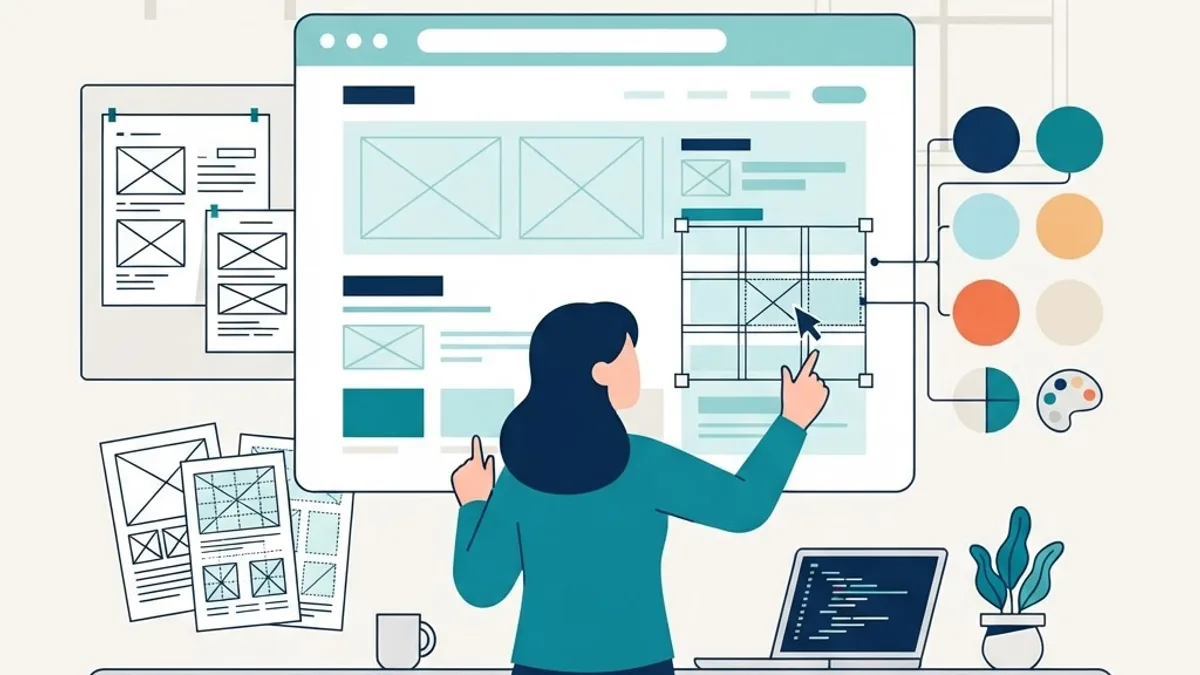
User experience, or UX, sits at the heart of a web designer's responsibilities. UX design focuses on how a site works and how it feels to use. The designer creates wireframes and prototypes that define layout, interaction patterns, and flow before any visual styling is applied. This allows the team to test and refine the experience early, when changes are inexpensive.
Great UX reduces friction at every step, guiding visitors smoothly toward their goals. The designer considers questions like how many clicks a task requires, whether forms are easy to complete, and how the site behaves when something goes wrong. These decisions determine whether visitors accomplish what they came to do or leave in frustration.
Crafting the Visual Design
Visual design is the responsibility most people associate with web designers, and for good reason. The designer establishes the look and feel: color palette, typography, spacing, imagery, and overall style. These choices communicate brand personality and create the emotional impression that shapes how visitors perceive the business.
Effective visual design is disciplined, not decorative for its own sake. The designer builds a cohesive system where every element reinforces the brand and supports usability. Supporting creative assets, such as infographic design and coordinated graphic design, extend that visual identity consistently across the site and beyond.
Ensuring Responsiveness Across Devices
A web designer is responsible for ensuring the site works beautifully on every screen, from small phones to large desktops. This means designing flexible layouts that adapt gracefully, with legible text, comfortable tap targets, and logical content order on any device. Because most traffic and search evaluation happen on mobile, responsiveness is non-negotiable.
The designer works closely with developers to ensure designs translate accurately into responsive code. This collaboration, bridging design and front-end web development, ensures the polished mockup becomes a real, functioning site that performs well everywhere.
Prioritizing Accessibility
Modern web designers are responsible for creating experiences everyone can use, including people who rely on assistive technologies. This means choosing accessible color contrast, providing text alternatives for images, ensuring keyboard operability, and using clear, logical structure. Accessibility is both an ethical obligation and a practical benefit, since accessible sites are easier for everyone to use and tend to perform better in search.
By building accessibility into the design from the start, the designer avoids costly retrofits and expands the site's potential audience. This responsibility reflects a mature understanding that good design serves all users, not just a convenient majority.
Collaborating With Developers and Stakeholders
Web design is rarely a solo endeavor. The designer is responsible for communicating clearly with developers, content creators, marketers, and clients. This includes preparing design specifications, explaining intent, providing assets, and answering questions during implementation. Miscommunication at this stage can derail a project, so strong collaboration skills are essential.
The designer also gathers and incorporates feedback throughout the process, balancing competing opinions while protecting the integrity of the user experience. This diplomatic role, translating between technical and non-technical stakeholders, is a vital part of delivering a successful project alongside the broader web development team.
Maintaining Consistency With a Design System
To keep a website cohesive, a web designer is responsible for creating and maintaining a design system: a documented set of reusable components, styles, and rules. This system ensures buttons, forms, headings, and spacing behave consistently across every page, which strengthens the brand and simplifies future work.
A well-maintained design system also speeds up development and makes updates far easier. As the site grows, the designer keeps the system current, adding new components and refining existing ones. This ongoing stewardship prevents the gradual inconsistency that plagues sites without clear standards.
Testing, Iterating, and Improving
A web designer's work does not end at launch. The designer is responsible for reviewing how the site performs, gathering feedback, and identifying opportunities to improve. This might involve analyzing user behavior, running tests, and refining layouts or calls to action based on real data.
Continuous improvement transforms a good website into a great one over time. Working alongside website maintenance and support and a broader digital marketing strategy, the designer helps ensure the site keeps meeting user needs and business goals long after the initial build.
Frequently Asked Questions
What are the main responsibilities of a web designer?
A web designer is responsible for understanding business goals and user needs, planning information architecture, designing the user experience, crafting visual design, ensuring responsiveness and accessibility, collaborating with developers, maintaining a design system, and iterating based on results. The role blends research, strategy, creativity, and communication.
What is the difference between a web designer and a web developer?
A web designer focuses on how a site looks, feels, and works from the user's perspective, creating layouts, visuals, and user experiences. A web developer builds the functional site using code. The two roles overlap and collaborate closely, and some professionals do both, but their core responsibilities differ.
Do web designers need to know how to code?
Not always, but understanding front-end fundamentals helps designers create realistic, buildable designs and communicate effectively with developers. Many designers know at least basic HTML and CSS. Even without deep coding skills, a designer must understand technical constraints to design experiences that can actually be built.
Is accessibility really a web designer's responsibility?
Yes. Accessibility is a core responsibility of modern web design. Designers choose accessible colors, provide text alternatives, ensure keyboard operability, and use clear structure. Building accessibility in from the start is both an ethical duty and a practical advantage, since it broadens the audience and improves overall usability.
How does a web designer measure success?
Success is measured against the goals defined at the start, such as increased inquiries, sign-ups, sales, or engagement. Designers review analytics, gather user feedback, and test changes to confirm the site achieves its objectives. Aesthetics matter, but effectiveness, whether the site helps users and the business succeed, is the true measure.
Conclusion
A web designer is responsible for far more than appearances. From researching goals and users to shaping architecture, experience, visuals, accessibility, and ongoing improvement, the role demands a rare combination of empathy, creativity, technical understanding, and communication. Recognizing the full scope of these responsibilities helps businesses value the expertise behind every effective website and choose partners who take each duty seriously. If you are ready to work with professionals who treat every one of these responsibilities with care, explore expert website design services and start building a site that truly performs.
Frequently Asked Questions
What are the main responsibilities of a web designer?
A web designer is responsible for understanding business goals and user needs, planning information architecture, designing the user experience, crafting visual design, ensuring responsiveness and accessibility, collaborating with developers, maintaining a design system, and iterating based on results. The role blends research, strategy, creativity, and communication.
What is the difference between a web designer and a web developer?
A web designer focuses on how a site looks, feels, and works from the user's perspective, creating layouts, visuals, and user experiences. A web developer builds the functional site using code. The two roles overlap and collaborate closely, and some professionals do both, but their core responsibilities differ.
Do web designers need to know how to code?
Not always, but understanding front-end fundamentals helps designers create realistic, buildable designs and communicate effectively with developers. Many designers know at least basic HTML and CSS. Even without deep coding skills, a designer must understand technical constraints to design experiences that can actually be built.
Is accessibility really a web designer's responsibility?
Yes. Accessibility is a core responsibility of modern web design. Designers choose accessible colors, provide text alternatives, ensure keyboard operability, and use clear structure. Building accessibility in from the start is both an ethical duty and a practical advantage, since it broadens the audience and improves overall usability.
How does a web designer measure success?
Success is measured against the goals defined at the start, such as increased inquiries, sign-ups, sales, or engagement. Designers review analytics, gather user feedback, and test changes to confirm the site achieves its objectives. Aesthetics matter, but effectiveness, whether the site helps users and the business succeed, is the true measure.
More from Technology
Continue exploring our curated collection of articles

SEO Computers: Choosing the Right Machine and Ranking a Computer Business Online
SEO computers explained two ways: the hardware specs that genuinely speed up SEO work, and how computer businesses rank for the searches that bring customers.

modern seo
How modern SEO actually works in the AI search era, based on 18 months of traffic data across 40 sites, including what stopped working and what never changed.

How AI Is Reshaping SEO and Content Marketing
Discover how AI is reshaping SEO and content marketing, from generative search and intent modeling to automated content workflows, E-E-A-T, and measurable results.