Why Is Accessibility Important in Web Design?
Discover why accessibility is essential in web design, how it expands your audience, improves SEO, reduces legal risk, and makes better experiences for everyone.
Elena Vasquez
Author
Accessibility in web design is often misunderstood as a niche concern or an optional extra reserved for large organizations. In reality, it is a fundamental part of building websites that work for everyone. Around the world, a significant portion of the population lives with some form of disability, whether visual, auditory, motor, or cognitive, and countless others experience temporary or situational limitations. Designing accessible websites is not just the right thing to do; it is a smart business decision that expands your reach, strengthens your brand, improves search performance, and reduces legal risk. This guide explains why accessibility matters and how it benefits everyone.
What Web Accessibility Really Means
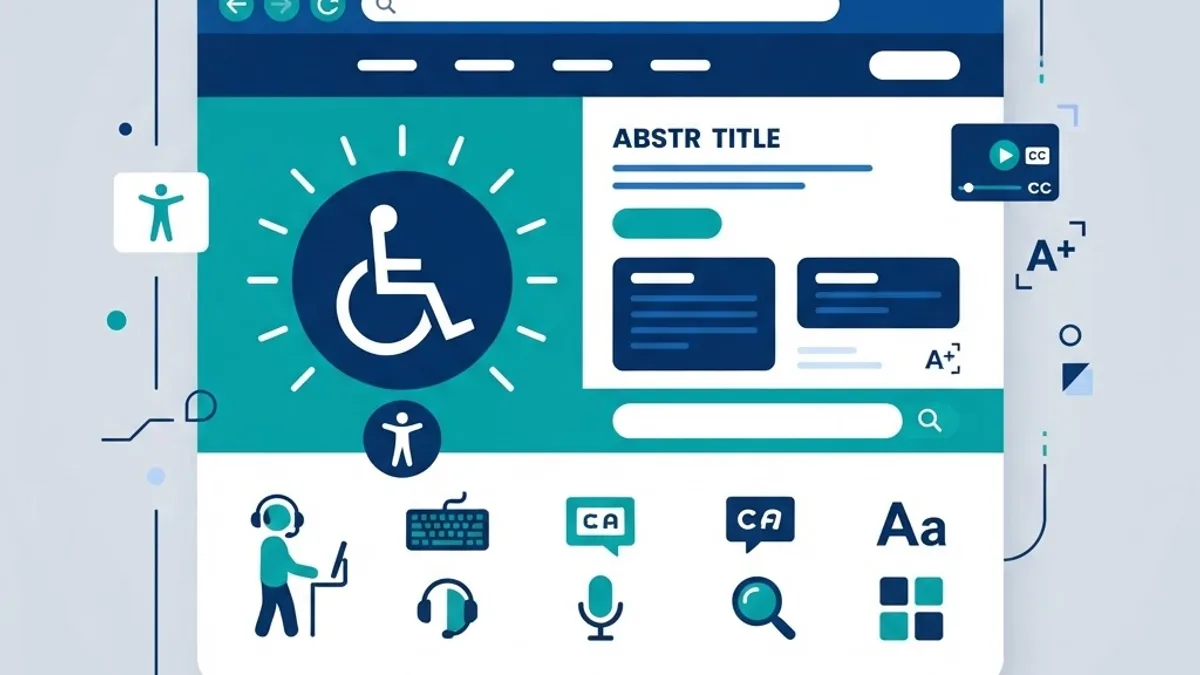
Web accessibility means designing and building websites so that people with disabilities can perceive, understand, navigate, and interact with them. This includes users who rely on screen readers, navigate by keyboard, need captions for audio, or require sufficient color contrast to read comfortably. Accessibility ensures these users can accomplish the same tasks as anyone else.
Importantly, accessibility follows established guidelines that define measurable standards for perceivable, operable, understandable, and robust experiences. Meeting these standards during website design is far easier and cheaper than retrofitting them later, which is why accessibility should be considered from the very first planning session.
Expanding Your Audience and Market
Every inaccessible website turns away potential customers. When people with disabilities cannot use your site, they take their business elsewhere, often to a competitor who made the effort to be inclusive. By designing accessibly, you open your doors to a substantial audience that is frequently overlooked, along with their families and networks.
This expanded reach represents real revenue. Accessible design is not charity; it is market expansion. Businesses that prioritize inclusivity tap into a loyal customer base and demonstrate values that resonate broadly. Combined with a thoughtful digital marketing strategy, accessibility helps you reach and convert the widest possible audience.
Improving SEO and Search Visibility
Accessibility and search engine optimization share deep roots. Many practices that make a site accessible also make it more discoverable. Descriptive alt text helps both screen readers and search engines understand images. Proper heading structure clarifies content hierarchy for assistive technologies and crawlers alike. Clean, semantic markup improves both interpretation and indexing.
Fast performance, clear navigation, and well-structured content benefit every user and align with what search engines reward. In practice, investing in accessibility often lifts your rankings as a natural byproduct. Supported by strong content writing, accessible content reaches more people through both assistive tools and organic search.
Enhancing Usability for Everyone
Accessibility improvements rarely help only people with disabilities. Captions benefit anyone watching video in a noisy environment or without headphones. High contrast helps users in bright sunlight. Clear navigation and readable text make life easier for everyone, including older users and those in a hurry. This principle, often called universal design, means accessible sites are simply better sites.
Consider keyboard navigation: while essential for users with motor impairments, it also serves power users who prefer keyboard shortcuts. Or think of clear form labels, which reduce errors for all users. Accessibility raises the baseline quality of the entire experience, delivered through careful front-end web development.
Reducing Legal Risk
Around the world, legislation increasingly requires websites to be accessible, and lawsuits over inaccessible sites have risen sharply. Businesses that ignore accessibility face genuine legal and financial exposure, along with reputational damage. Compliance is no longer optional for many organizations, and the trend points firmly toward stricter enforcement.
Proactively building accessible websites protects you from these risks. It is far less expensive to design inclusively from the start than to face legal action and emergency remediation later. Treating accessibility as a core requirement, supported by ongoing website maintenance and support, keeps your site compliant as standards evolve.
Strengthening Brand Reputation
How a business treats accessibility reflects its values. Companies that prioritize inclusivity earn respect and loyalty, while those that neglect it risk being seen as indifferent or exclusionary. In an era where consumers increasingly support brands that align with their values, accessibility is a meaningful differentiator.
An accessible website signals professionalism, care, and social responsibility. It tells every visitor that your business considers their needs. This positive impression strengthens trust, which is the foundation of every customer relationship and a key factor in long-term success.
Common Accessibility Practices
Building an accessible site involves several concrete practices. Provide descriptive alternative text for meaningful images so screen readers can convey their purpose. Ensure sufficient color contrast between text and background. Make all functionality operable by keyboard, without requiring a mouse. Label form fields clearly and provide helpful error messages.
Additional practices include using semantic HTML to convey structure, adding captions and transcripts for media, avoiding content that flashes rapidly, and ensuring the site remains usable when zoomed. These techniques, implemented through expert web development, form the backbone of an inclusive experience that works across abilities and devices.
Accessibility as an Ongoing Commitment
Accessibility is not a one-time checkbox but an ongoing commitment. As you add content, features, and updates, new accessibility issues can creep in. Regular audits, testing with real assistive technologies, and incorporating accessibility into your standard workflow keep your site inclusive over time.
Making accessibility part of your culture, rather than a last-minute fix, ensures it endures. Pairing this mindset with quality visuals from professional graphic design and emerging artificial intelligence tools that assist with audits helps you maintain accessibility efficiently as your site grows.
Frequently Asked Questions
Why is accessibility important in web design?
Accessibility ensures people with disabilities can use your website, which expands your audience, improves usability for everyone, boosts SEO, reduces legal risk, and strengthens your brand reputation. It is both an ethical responsibility and a sound business decision that benefits users and organizations alike.
Does web accessibility help with SEO?
Yes. Many accessibility practices directly improve SEO. Descriptive alt text, proper heading structure, semantic markup, fast performance, and clear navigation help both assistive technologies and search engines understand your content. Investing in accessibility often improves search visibility as a natural side effect.
Who benefits from accessible web design?
Everyone benefits. People with permanent, temporary, or situational disabilities gain access, but accessible features also help older users, people in noisy or bright environments, those on slow connections, and power users. Accessibility raises the overall quality and usability of a website for all visitors.
Is web accessibility legally required?
In many jurisdictions, yes. Laws increasingly require websites, especially those of businesses and public organizations, to be accessible, and lawsuits over inaccessible sites are rising. Requirements vary by region, but the global trend is toward stricter enforcement, making proactive accessibility a wise way to reduce legal exposure.
How do I make my existing website accessible?
Start with an audit to identify issues like missing alt text, poor contrast, keyboard traps, and unlabeled forms. Prioritize high-impact fixes, use semantic HTML, add captions for media, and test with real assistive technologies. Building accessibility into your ongoing workflow prevents new issues and keeps the site inclusive over time.
Conclusion
Accessibility is not an optional enhancement; it is essential to responsible, effective web design. By making your site usable for everyone, you expand your audience, improve search performance, reduce legal risk, and build a brand that people trust. Best of all, accessible design makes the experience better for every visitor, not just those with disabilities. If you want a website that welcomes everyone and performs beautifully, partner with an experienced website design team that treats accessibility as a core principle from day one.
Frequently Asked Questions
Why is accessibility important in web design?
Accessibility ensures people with disabilities can use your website, which expands your audience, improves usability for everyone, boosts SEO, reduces legal risk, and strengthens your brand reputation. It is both an ethical responsibility and a sound business decision that benefits users and organizations alike.
Does web accessibility help with SEO?
Yes. Many accessibility practices directly improve SEO. Descriptive alt text, proper heading structure, semantic markup, fast performance, and clear navigation help both assistive technologies and search engines understand your content. Investing in accessibility often improves search visibility as a natural side effect.
Who benefits from accessible web design?
Everyone benefits. People with permanent, temporary, or situational disabilities gain access, but accessible features also help older users, people in noisy or bright environments, those on slow connections, and power users. Accessibility raises the overall quality and usability of a website for all visitors.
Is web accessibility legally required?
In many jurisdictions, yes. Laws increasingly require websites, especially those of businesses and public organizations, to be accessible, and lawsuits over inaccessible sites are rising. Requirements vary by region, but the global trend is toward stricter enforcement, making proactive accessibility a wise way to reduce legal exposure.
How do I make my existing website accessible?
Start with an audit to identify issues like missing alt text, poor contrast, keyboard traps, and unlabeled forms. Prioritize high-impact fixes, use semantic HTML, add captions for media, and test with real assistive technologies. Building accessibility into your ongoing workflow prevents new issues and keeps the site inclusive over time.
More from Technology
Continue exploring our curated collection of articles

SEO Computers: Choosing the Right Machine and Ranking a Computer Business Online
SEO computers explained two ways: the hardware specs that genuinely speed up SEO work, and how computer businesses rank for the searches that bring customers.

modern seo
How modern SEO actually works in the AI search era, based on 18 months of traffic data across 40 sites, including what stopped working and what never changed.

How AI Is Reshaping SEO and Content Marketing
Discover how AI is reshaping SEO and content marketing, from generative search and intent modeling to automated content workflows, E-E-A-T, and measurable results.