Will Mechanical Engineers Be Replaced by AI?
Will mechanical engineers be replaced by AI? Explore how automation is changing the field, which tasks are at risk, and how to future-proof your engineering career.
James Whitfield
Author
As automation advances, students, parents, and working professionals keep asking whether mechanical engineering is a safe career choice. Will mechanical engineers be replaced by AI, or is the profession simply evolving? This is a fair question in an era when algorithms design components, simulate physics, and optimise manufacturing. The realistic answer is that AI is automating parts of the job while making skilled engineers more valuable, not obsolete. This article explores how automation is reshaping mechanical engineering, which tasks are genuinely at risk, and how to future-proof your career.
Table of Contents
- The realistic outlook - How AI is changing mechanical engineering - Tasks at risk of automation - Why engineers remain essential - The rise of the augmented engineer - Future-proofing your engineering career - What the job market signals - Frequently Asked Questions - Conclusion
The Realistic Outlook
Mechanical engineering will not be eliminated by AI, but it is changing meaningfully. History offers a useful lesson: previous waves of automation, from CAD software to CNC machining, transformed how engineers work without removing the need for them. AI is the latest and most powerful of these waves. It will take over repetitive, well-defined tasks while amplifying the impact of engineers who learn to wield it.
The people at genuine risk are those whose roles consist almost entirely of routine, automatable work and who refuse to adapt. Engineers who evolve alongside the tools will find their productivity and value rising. In short, AI is a career accelerator for the adaptable and a threat only to the stagnant.
How AI Is Changing Mechanical Engineering
AI is already embedded across the engineering workflow. Generative design tools produce optimised geometries from a set of constraints, exploring possibilities no human could enumerate by hand. Simulation is accelerating as machine learning models approximate expensive analyses, letting engineers iterate faster during early design.
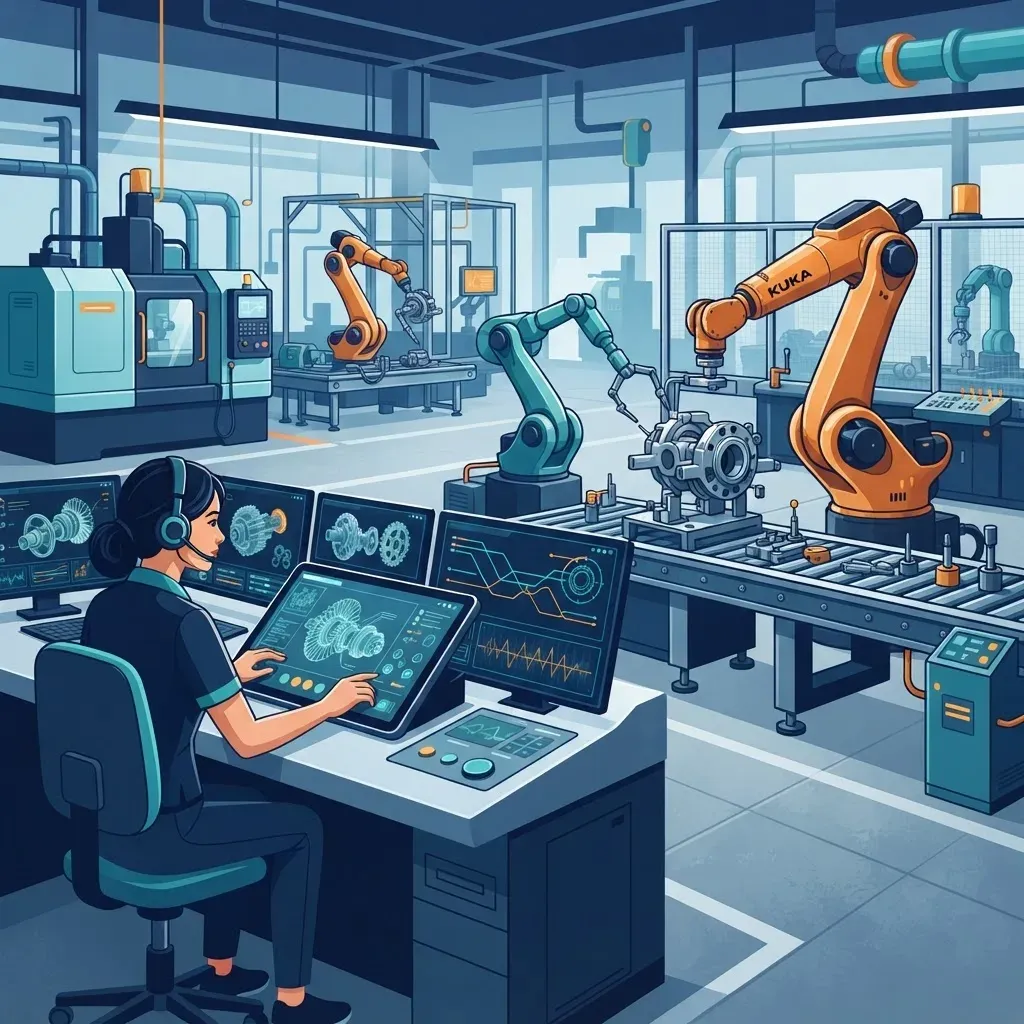
In manufacturing, AI drives predictive maintenance, quality inspection through computer vision, and process optimisation that reduces waste and downtime. Automation and robotics handle production tasks with increasing sophistication. Even documentation, calculation, and routine coding are being streamlined by AI assistants. These tools do not think like engineers, but they dramatically speed up the mechanical, repetitive parts of engineering work. Companies deploying such capabilities often rely on artificial intelligence specialists to integrate them into existing systems.
Tasks at Risk of Automation
Being clear-eyed about which tasks are exposed helps engineers prepare. Routine drafting and detailing, standard component selection and sizing, repetitive calculations, first-pass simulations, and boilerplate documentation are all increasingly automatable. Basic quality inspection is being handled by vision systems, and simple process optimisation by algorithms.
The common thread is that these tasks are well-defined, rule-based, and repetitive, exactly what machines excel at. An engineer whose daily work is dominated by these activities should expect significant change and should deliberately move toward less automatable, higher-value work. Recognising this early is the difference between being disrupted and staying ahead.
Why Engineers Remain Essential
Despite these advances, mechanical engineers remain indispensable for reasons AI cannot easily overcome. Engineering requires physical intuition, the hard-won sense of how materials, forces, and machines behave in the messy real world. AI knows only its training data and struggles with genuinely novel situations that experienced engineers navigate instinctively.
Engineering also demands accountability. When a design affects human safety, someone must take responsibility, and that cannot be delegated to an algorithm. Defining the right problem, balancing competing priorities like cost, safety, and sustainability, communicating with stakeholders, and making judgment calls under uncertainty are deeply human capabilities. Turning ambiguous needs into buildable solutions requires context and creativity, much as turning business goals into working web development requires human insight rather than tools alone.
The Rise of the Augmented Engineer
The most accurate picture of the future is not the replaced engineer but the augmented one. AI handles the tedious execution while the engineer focuses on strategy, judgment, and creativity. An augmented engineer configures generative design tools, critically evaluates their output, runs rapid simulations, and makes the final decisions, accomplishing far more than an unaugmented predecessor.
This mirrors what happened in other fields: spreadsheets did not replace analysts but made them more powerful, and design software did not replace architects but expanded what they could create. The engineers who embrace AI as a collaborator will out-compete both those who ignore it and, in many cases, the tools alone. The winning combination is human judgment amplified by machine capability.
Future-Proofing Your Engineering Career
To thrive, invest deliberately in skills that AI cannot replicate and in the ability to use AI well. Develop fluency with computational and AI tools so you can direct them rather than fear them. Deepen your domain expertise and physical intuition, the knowledge that lets you judge whether an AI-generated design is actually sound.
Strengthen human skills, communication, leadership, ethical reasoning, and creative problem framing, because these become more valuable as routine work is automated. Cultivate adaptability and a habit of continuous learning, since tools will keep changing. Consider developing hybrid expertise at the intersection of engineering and data science, a combination in high demand. Building a strong professional presence, supported by a clean website design, can also help you showcase these evolving skills to employers.
What the Job Market Signals
Labour market trends reinforce the optimistic-but-evolving view. Demand for mechanical engineers remains solid, and new roles are emerging at the intersection of engineering, automation, and data. Employers increasingly value engineers who can work with AI tools, and job descriptions reflect this shift toward computational and interdisciplinary skills.
Rather than shrinking, the profession is transforming, with the highest demand for engineers who combine core fundamentals with modern digital fluency. This signals a clear strategy for anyone entering or advancing in the field: master the fundamentals, then layer AI and computational skills on top. Those who do will find abundant opportunity rather than obsolescence.
Frequently Asked Questions
Will mechanical engineers be replaced by AI in the near future?
No. AI is automating specific repetitive tasks within mechanical engineering, but it is not replacing the profession. Core responsibilities like physical intuition, accountability, problem definition, and creative judgment remain human. The role is evolving toward supervising and integrating AI rather than being eliminated by it.
Which mechanical engineering tasks will AI automate?
AI is automating routine drafting and detailing, standard component sizing, repetitive calculations, first-pass simulations, boilerplate documentation, and basic quality inspection. These tasks are well-defined and repetitive, so engineers should shift toward higher-value work that AI cannot easily replicate.
Is mechanical engineering still a good career with AI advancing?
Yes. Demand for mechanical engineers remains strong, and AI increases the productivity and value of skilled engineers. New roles are emerging at the intersection of engineering and data science, so students who combine core fundamentals with AI and computational skills are well positioned.
How can mechanical engineers avoid being replaced by AI?
Engineers can future-proof their careers by becoming fluent with AI and computational tools, deepening domain expertise and physical intuition, strengthening human skills like communication and judgment, and committing to continuous learning. Those who treat AI as a collaborator become significantly more valuable.
What is an augmented engineer?
An augmented engineer uses AI to handle repetitive execution while focusing on strategy, judgment, and creativity. By configuring tools like generative design, critically evaluating their output, and making final decisions, augmented engineers accomplish far more than those who work without AI, and they out-compete both non-adopters and tools alone.
Conclusion
Will mechanical engineers be replaced by AI? The evidence points firmly to no. AI is automating repetitive tasks and transforming workflows, but it amplifies rather than replaces the judgment, creativity, and accountability at the heart of engineering. The engineers who thrive will be augmented engineers who embrace AI as a powerful collaborator, while only those who refuse to adapt face real risk. Master the fundamentals, add AI and computational fluency, and cultivate the human skills machines cannot match. If your organisation wants to integrate AI intelligently into engineering operations, partner with an experienced artificial intelligence team to build tools that empower your engineers rather than replace them.
Frequently Asked Questions
Will mechanical engineers be replaced by AI in the near future?
No. AI is automating specific repetitive tasks within mechanical engineering, but it is not replacing the profession. Core responsibilities like physical intuition, accountability, problem definition, and creative judgment remain human. The role is evolving toward supervising and integrating AI rather than being eliminated by it.
Which mechanical engineering tasks will AI automate?
AI is automating routine drafting and detailing, standard component sizing, repetitive calculations, first-pass simulations, boilerplate documentation, and basic quality inspection. These tasks are well-defined and repetitive, so engineers should shift toward higher-value work that AI cannot easily replicate.
Is mechanical engineering still a good career with AI advancing?
Yes. Demand for mechanical engineers remains strong, and AI increases the productivity and value of skilled engineers. New roles are emerging at the intersection of engineering and data science, so students who combine core fundamentals with AI and computational skills are well positioned.
How can mechanical engineers avoid being replaced by AI?
Engineers can future-proof their careers by becoming fluent with AI and computational tools, deepening domain expertise and physical intuition, strengthening human skills like communication and judgment, and committing to continuous learning. Those who treat AI as a collaborator become significantly more valuable.
What is an augmented engineer?
An augmented engineer uses AI to handle repetitive execution while focusing on strategy, judgment, and creativity. By configuring tools like generative design, critically evaluating their output, and making final decisions, augmented engineers accomplish far more than those who work without AI, and they out-compete both non-adopters and tools alone.
More from Career
Continue exploring our curated collection of articles

AI Attorney Jobs: Careers in Legal Tech for 2026
Explore AI attorney jobs in 2026, the emerging legal-tech roles, skills required, salary outlook, and how lawyers can build AI-powered legal careers.

Using AI for User Experience Design Jobs in 2026
Learn how to use AI for user experience design jobs in 2026, the tools reshaping UX work, the new skills required, and how designers stay indispensable.
Are Engineering Jobs at Risk From AI?
Are engineering jobs at risk from AI? Explore which engineering roles are exposed, which remain safe, and how engineers can future-proof their careers.